Where to start when looking for a job in Colombia
Begin by narrowing your project down to one occupation, one city and one type of employer. Colombia is a large country with very different regional job markets, and searching everywhere often means finding nothing anywhere. Write one sentence describing what you can do and for whom, then test it against real job ads to see whether it matches the vocabulary the market actually uses.
Next, build a realistic timeline covering the search, remote interviews, residence formalities and the move itself. Timelines depend on the employer and on your personal situation, and nothing guarantees a favourable outcome. Keep a simple tracker for every application: date sent, contact person, reply received, next follow-up. This habit stops you from chasing the same person twice and shows recruiters that you are organised.
Cities and sectors worth exploring for your profile
Bogotá is home to corporate headquarters, financial services, consulting firms and international organisations. Medellín attracts digital, industrial and shared-services jobs. Cali, Barranquilla and Cartagena offer other openings, particularly in trade, port activity and tourism.
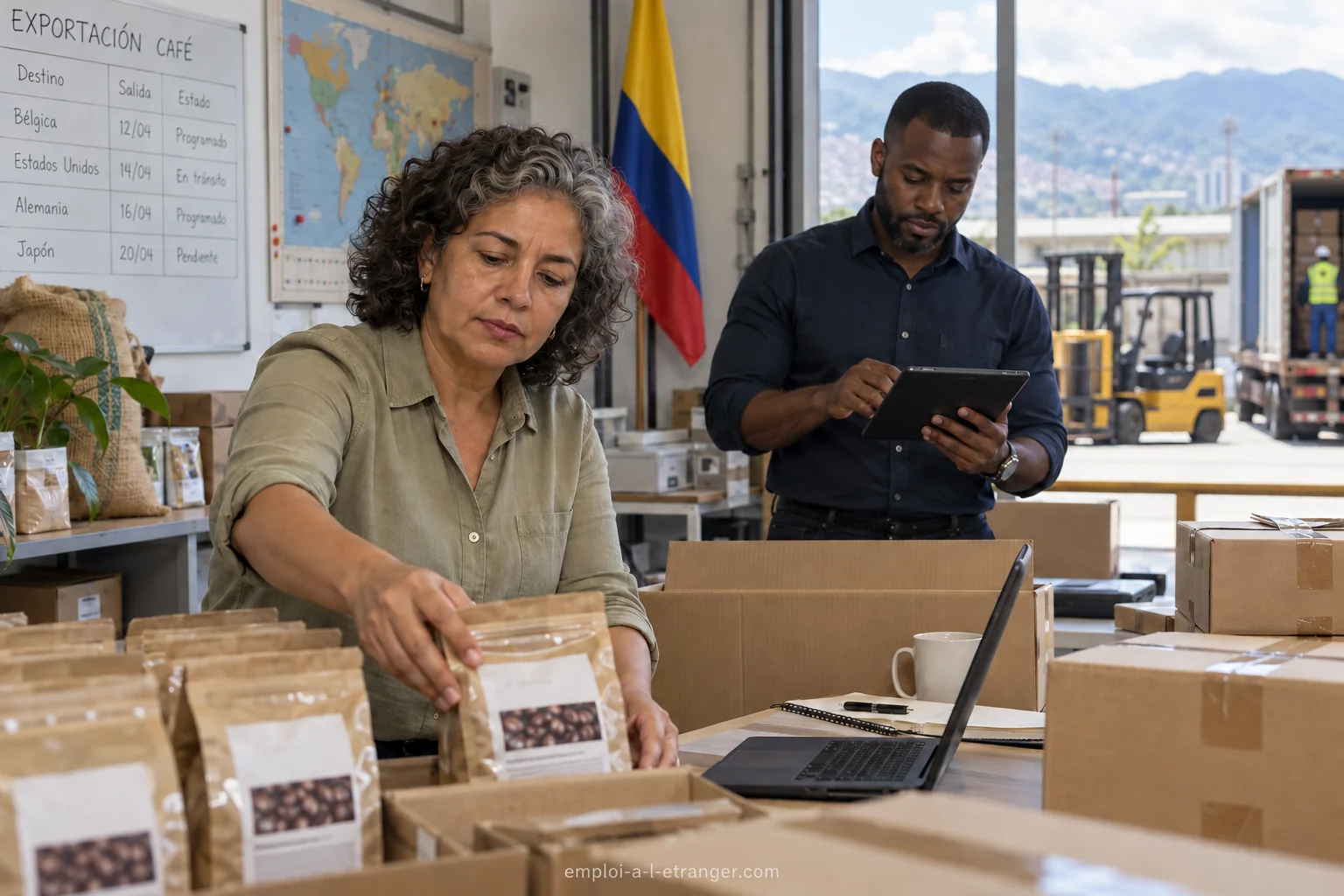
Agriculture and export sectors, including coffee, flowers and processed foods, mostly hire technical and logistics profiles. Language teaching, tourism and customer-contact centres also employ foreigners, often on conditions that vary widely from one recruiter to the next.
- Bogotá: consulting, finance, organisations, head offices
- Medellín: technology, industry, shared services
- Coastal areas: tourism, ports, trade
- Farming regions: exports, logistics, agronomy
Writing a hoja de vida that a Colombian recruiter can read quickly
The hoja de vida is the local equivalent of a CV or résumé. It is usually clear and factual: contact details, a short profile, experience listed from most recent to oldest, education, languages and tools. Adapt it to each advert by reusing the words of the job title and quoting concrete achievements rather than general qualities.
Write it in Spanish if the advert is in Spanish, or in both languages if not, and have a native speaker proofread it. State your Spanish level honestly without embellishing it: an employer will notice on the very first phone call. Leave out a photo, marital status or any data that does not support your application unless the advert explicitly asks for it, and check that the dates of each job match your supporting documents.
Using the Servicio Público de Empleo with realistic expectations
The Servicio Público de Empleo is the country’s public guidance and job-matching network. It lets you browse vacancies, register and find approved service providers. It is aimed first at people who already live in Colombia; a candidate abroad will mainly find useful reference points about occupations and regions.
Use it to understand which job titles come up repeatedly, which qualifications are requested and which employers are hiring. Then complete your search with job boards, professional associations and the network of bilateral chambers of commerce.
Checking a recruiter before you send any documents
A serious offer names the company, describes the role, gives the location and never asks for money. Before sending a copy of your passport or diplomas, confirm that the organisation exists, that the email address matches its activity and that the advert also appears on an official channel.
Ask which document is expected, which entity would sign the contract and in which language it would be written. A recruiter who insists on a private messaging app, promises a guaranteed visa or asks for processing fees should be dropped from your list.
- Legal company name and a verifiable address
- The advert found again on a second channel
- No payment requested before hiring
- A written contract before any departure
Visas and work authorisation: from job offer to consulate
For a foreigner, the right to work in Colombia depends on the visa obtained and on the position concerned. The Ministry of Labour publishes information on the employment of foreign nationals, and the Cancillería describes the visa categories and the documents required. The rules change, so always consult the official source as it stands at the time.
Never treat a job offer as an authorisation already granted. The safest approach is to ask the employer which steps it will handle, get the stages confirmed in writing and check every point with the nearest Colombian consulate. Keep a copy of all written exchanges with the employer and the consulate; they are your proof of what you were promised and of the conditions announced.
Contract, salary and social protection: questions to ask
Ask about the type of contract, its length, the probation period, the monthly salary, bonuses and health cover. Colombian labour law regulates several forms of contract, and protection differs sharply between a registered employee and an independent service provider.
Look at the cost of living in your chosen city before accepting, comparing rent, transport and insurance. A salary that looks fair by local standards can feel low to an expatriate who also pays for flights, translations and relocation costs.
Settling in: language, networking and first bearings
A working level of Spanish opens far more doors than English alone, except in a few international companies. Plan lessons before you leave and keep going once you arrive. Professional exchanges also rest on personal relationships, so build your network, attend industry events and accept informal meetings.
In daily life, find out about neighbourhood safety, getting around and opening a bank account. Get in touch with the local expatriate community and with consulates for practical advice, so that you do not depend on a paid intermediary.
Frequently asked questions
Do you need to speak Spanish to work in Colombia?
For the great majority of jobs, yes. Spanish remains the working language, even in shared-services centres or trade. A few international companies or schools recruit in English or French, but your integration and your career prospects will depend heavily on how well you speak Spanish.
Can you look for a job in Colombia from abroad?
Yes, through online applications, remote interviews and your professional network. Many employers do, however, expect you to be on site quickly. Before committing, check the company, obtain a written offer and confirm the visa steps with the Colombian authorities.
Can an employer get me a work visa?
An employer can take part in the process, but it does not control the outcome, which rests with the Colombian authorities. Ask in writing which documents it will provide, which steps remain your responsibility and what happens if the application is refused. Do not leave your current job before you have a clear answer.
Which documents should you prepare before applying?
Prepare a hoja de vida in Spanish, your diplomas with a translation where necessary, references from previous employers, a valid passport and, depending on the job, a criminal record certificate. Only send sensitive documents after checking the recruiter’s identity and that the position is genuine.