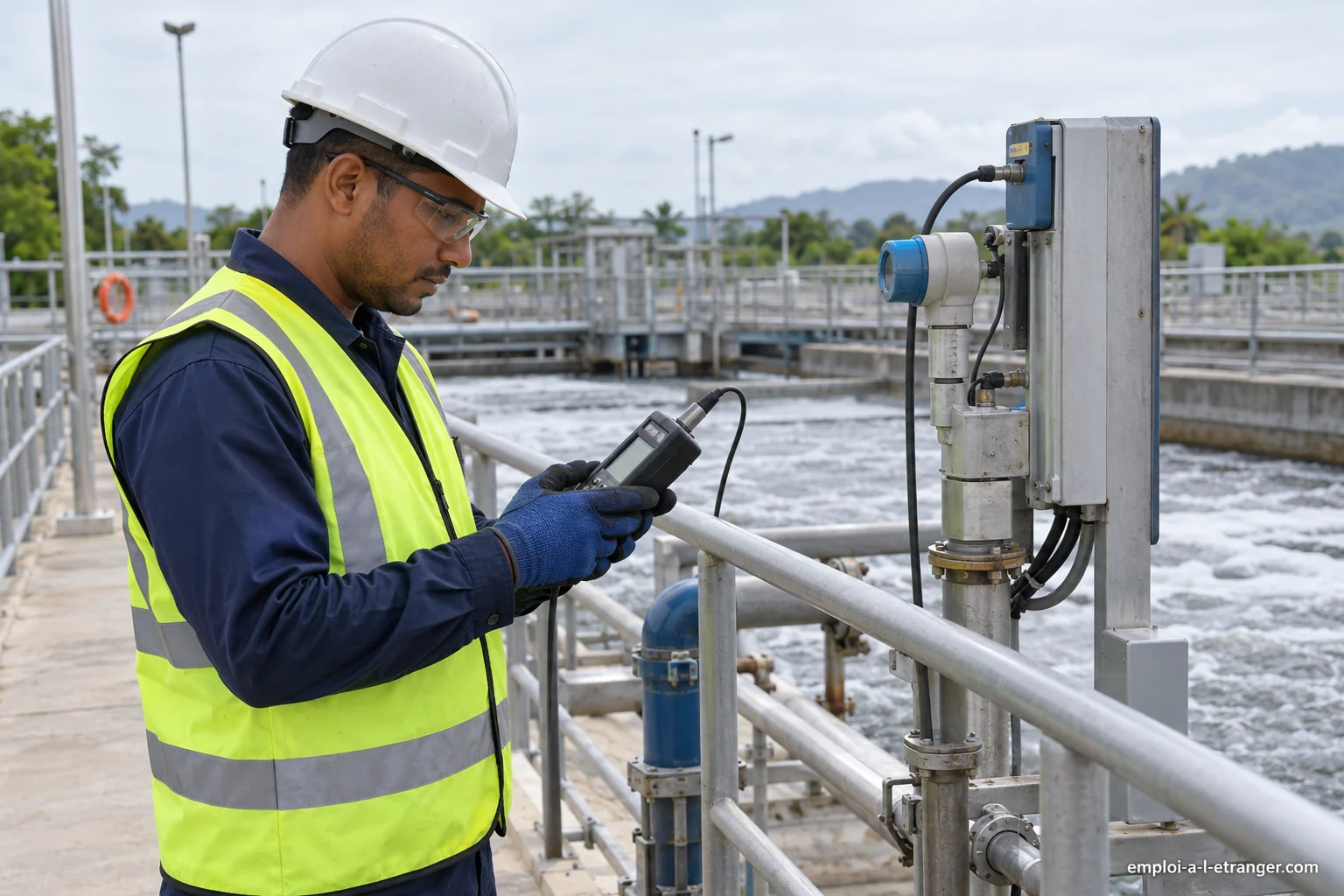
Three worlds under one job title: drinking water, wastewater, industrial
Water treatment brings together trades that share a vocabulary but not the same responsibilities. A drinking water plant aims at the health compliance of the water supplied. A wastewater treatment works treats effluent before it is released into the environment. An industrial installation prepares or cleans process water, with constraints specific to each client.
Before writing your application, identify the field you are aiming at and sort your experience accordingly. A technician who mostly ran filters and chlorination stations will not present the same strengths as a specialist in sludge dewatering or reverse osmosis membranes.
- Drinking water production
- Wastewater treatment
- Industrial process water
- Desalination and water reuse
Presenting your processes and equipment without overselling
Name the stages you have run: screening, settling, filtration, disinfection, biological treatment, dewatering. Specify the type of equipment, such as dosing pumps, online analysers, SCADA supervision or blowers, and say whether you were an operator, a maintenance technician or a shift leader.
Avoid claiming process adjustments that belonged to an engineer. An employer will quickly check that level during a trial period. It is better to describe your role faithfully, with an example of an abnormal situation, such as rising turbidity, a dose to correct or a pump failure, and how you reacted.
Keep a few pieces of evidence within reach: simplified diagrams of a site you operated, anonymised log books if your employer allows it, training certificates on chemicals or safety. These items give substance to the interview and prevent misunderstandings about the real level of responsibility you held.
Sampling, analysis and monitoring: the rigorous side of the job
A large part of the work consists of measuring, recording and comparing. State the parameters you monitored, the sampling methods used, the frequency of checks and how results were logged. Traceability is a central point, because the records are used by the authorities and by clients.
If you worked with a laboratory, explain the split of roles: who took samples, who analysed them, who decided on corrective action. Control procedures vary from country to country, and a foreign employer will want to know whether you can work with thresholds and protocols that differ from those you know.
Confined spaces, chemicals and certifications
Water installations carry real risks: gas in underground structures, handling of reagents, work next to tanks, rotating machinery. Training and authorisation requirements differ from country to country, and your French certificates are not necessarily recognised as they stand.
Ask which certifications are essential before you start, who pays for them and how long they take to obtain. Have the employer describe the protective equipment supplied, the gas detection devices, the procedure in an incident and how lone working is supervised. These safety points deserve precise answers, and you should ask for them in writing, since an employer who hesitates to put safety rules on paper is telling you something about the site.
Running one plant or troubleshooting at several clients
A fixed post at a works means knowing one site in depth, with its seasonal quirks, its load peaks and its maintenance habits. A travelling service job involves rounds, varied interventions and dealings with clients who do not all share the same technical background.
The questions differ accordingly. For a single site, ask about shift organisation and team size. For travel, ask about the area covered, the vehicle, nights away from home and who pays expenses. Each of these answers changes daily life profoundly.
On-call duty, weather and exceptional events
A treatment works does not stop at night. Storms, floods, power failures or sudden polluting loads can call for a quick response. Ask how on-call duty is shared, what arrival time is expected and whether housing near the site is offered.
In some countries the climate adds its own constraints: strong heat, frost, the rainy season. Find out how these conditions affect the plants and outdoor work, and what equipment is provided to cope with them.
Passing on instructions, language and site documentation
Operating instructions, logbooks, emergency procedures and safety data sheets are written in a specific language. Ask which one, and see whether a colleague will be available to help you read the documents during the first weeks.
Also learn how information travels from one shift to the next: handover log, supervision system, handover meeting. In a sensitive installation, a missed handover can have real consequences. Your ability to report the state of a site clearly will be watched closely.
Finding employers and securing your move
Operators and equipment makers in the sector, such as Veolia, SUEZ or Xylem, publish vacancies on their careers pages. Local authorities, municipal water boards and engineering firms in your target country also recruit, often in the local language only. Look for them with the vocabulary of that country rather than the English job title you know.
For residence and work formalities, turn to the competent authority of the destination country. Ask in writing for the place of assignment, the hours, the pay and the benefits before resigning, and do not rely on a simple verbal promise from an intermediary.
Frequently asked questions
Do I need a specific qualification to be a water treatment technician abroad?
Requirements vary. Some employers ask for a technical qualification in the field, others accept solid experience and further training. In some countries a local operator certification is compulsory to run a plant. Ask the employer and the competent authority before you apply.
Is my wastewater plant experience useful for drinking water?
It is partly transferable: running pumps, maintenance, monitoring parameters, rigorous record keeping. But the health stakes, the reagents and the regulations differ. Present what is common, acknowledge what you will need to learn, and ask whether induction training is planned.
How can I make sure a confined-space job is properly supervised?
Ask for the written procedure, the training required, the detection equipment supplied, the protective equipment and the systematic presence of a second person. A serious company presents these elements without difficulty. If the answers are evasive, treat it as a warning sign and seek advice before accepting.
Is on-call duty common in this trade?
Yes, because plants run continuously and incidents do not wait for office hours. Arrangements differ greatly: rotation among colleagues, rare or frequent calls, compensation in money or time off. Have the on-call rules and their compensation written into your contract before you sign.