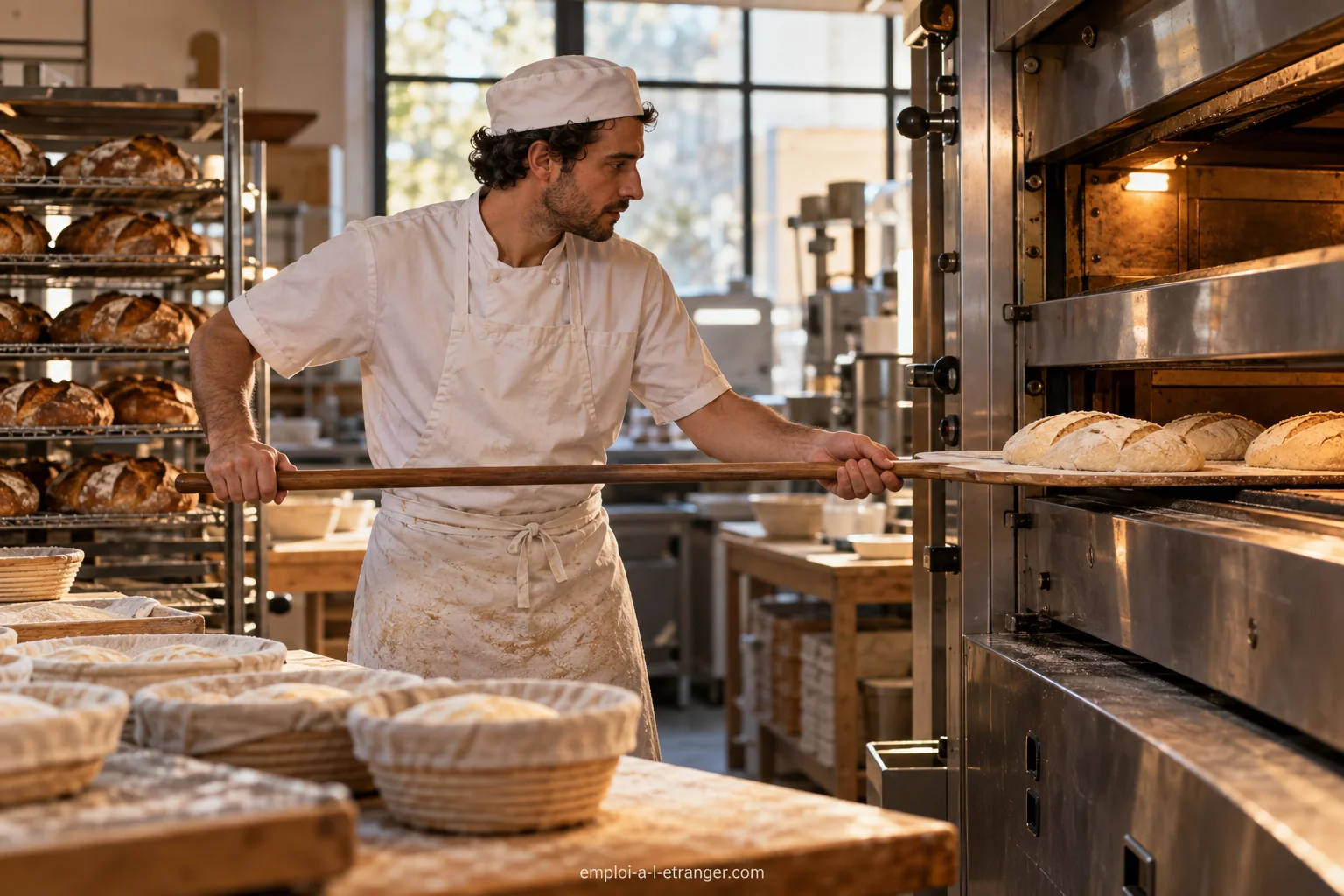
Describing your bread-making know-how
A recruiter wants to know what you actually make. Name the doughs you work with (everyday loaves, sourdough, country bread, viennoiserie, gluten-free bread), your fermentation methods, mixing, shaping by hand or by machine, and the kinds of baking you have mastered.
Add the scale of production: number of batches per night, varieties of bread offered, whether there is a shop counter. A plain description with examples of consistency is better than a general phrase about a love of bread, which every candidate uses.
If you work with natural sourdough, explain how you maintain it, how often you refresh it and the proofing temperature you aim for. These details show that you master the process and not just the recipe, and they let the head baker compare your methods with his or her own.
- Doughs and starters you work with
- Hand shaping or machine shaping
- Types of oven used
- Batches baked per night
Artisan bakehouse, hotel kitchen or larger production site
In an artisan bakehouse you handle everything: mixer, shaping, loading the oven, sometimes the shop. In a hotel, production follows a schedule of breakfasts and banquets. In a larger bakery the work is divided by station, with more machines and quality control.
Say clearly which setting you have worked in and which one you want to grow in. The recruiter will see whether your background matches the job on offer, and you will avoid taking a highly mechanised post when you are looking for craft work, or the opposite.
One more useful point: mention whether you have worked in a pastry section attached to a bakehouse, because some employers look for a person who can cover both roles.
Showing independence and consistency
Consistency is the first quality of a baker: the same loaf every morning, despite the weather, the humidity of the bakehouse and changes in flour. Explain how you adjusted hydration, water temperature and proofing time when conditions shifted.
Say as well whether you worked nights alone, trained an apprentice or stood in for the head baker. These points give an idea of your independence. If you have not yet run a bakehouse, stress your reliability, your punctuality and your ability to follow an established recipe.
Products, flours and equipment on site
Ask which products are made each day, and with which flours and raw materials. A local flour does not behave like the one you are used to: water absorption, strength, fermentation time and crust colour can change noticeably.
Ask about equipment as well: deck oven, rotary oven, proofing chamber, dough sheeter, mixer. Unfamiliar machinery needs a learning period, and you should negotiate it. If possible, look at photos of the bakehouse or hold a video call with the production manager before you commit.
Night hours, days off and who does which task
A baker’s working day often starts at night or very early in the morning. Ask for the start and finish times, the days off, whether there are split shifts and whether a written rota exists. Habits differ by country: Sunday opening, working on public holidays, the pace at weekends.
Check who cleans the bakehouse, who receives deliveries and who runs the sales counter. A job advertised as baker may include packing, serving at the counter or making deliveries. These tasks are not unusual, but they should be known before the contract is signed.
Food hygiene, safety and regulations
Rules on food hygiene, allergen labelling, storage temperatures and traceability differ between countries. Your previous experience is useful, but you will have to apply local instructions from the first days. Ask how they will be passed on to you.
Find out about physical safety too: lifting heavy sacks, the heat in the bakehouse, guards on machines, a first aid kit. A company that answers these questions precisely shows that it is well run. An evasive reply deserves a further check.
Adapting to local buying habits
Changing country changes the bread that customers buy: shape, crumb, crust, flavour, time of day. A baker trained on the baguette may have to learn flatbreads, rye loaves or flavoured breads. Ask which products sell best and which are new to you.
Discuss the adjustment expected and the training planned. A serious employer accepts a learning period, above all if your know-how brings something different. Offer to present a product from your own repertoire once you have understood local demand.
Take a look at the neighbourhood competition as well: nearby bakeries, supermarkets, pastry shops. A product that works in one town may not find its customers somewhere else. Ask the employer how prices are set and how a new loaf is chosen for launch.
Searching for a post and checking the employer
Bakery vacancies appear on hospitality job boards, on the careers pages of bakery chains and large hotel groups, and through direct contact with independent bakehouses. Compare the advert with the company’s website and with public reviews.
Refuse requests for payment to get a job and promises of a visa without a contract. A serious employer sends a written offer with the place, hours, pay and its role in your residence process, which you will then confirm with the competent authorities.
Frequently asked questions
Is a baker’s diploma required abroad?
Depending on the country and the employer, a diploma may be requested, appreciated or irrelevant. Many companies look mainly at experience and a trial shift in the bakehouse. If your qualification needs to be recognised, check with the competent authority, separately from your practical experience.
Can I make French-style bread with local flours?
Yes, but recipes need adapting. The strength of the flour, its absorption and its behaviour in fermentation all change. Allow for test bakes, accept a period of adjustment and ask the employer which flours it uses, so you do not discover the difference on day one.
Are night shifts the norm?
In most bakehouses, work starts very early or at night so that the bread is ready when the shop opens. Exact hours, days off and extra pay vary by business. Ask for a typical rota and check it in the contract before you leave.
How should I present a sample of my work?
Attach a few clear photos of your breads, with a description of the doughs, methods and quantities. State your exact role in each production. Avoid pictures taken at another bakehouse without permission. A short summary of your professional references is a useful addition to the file.