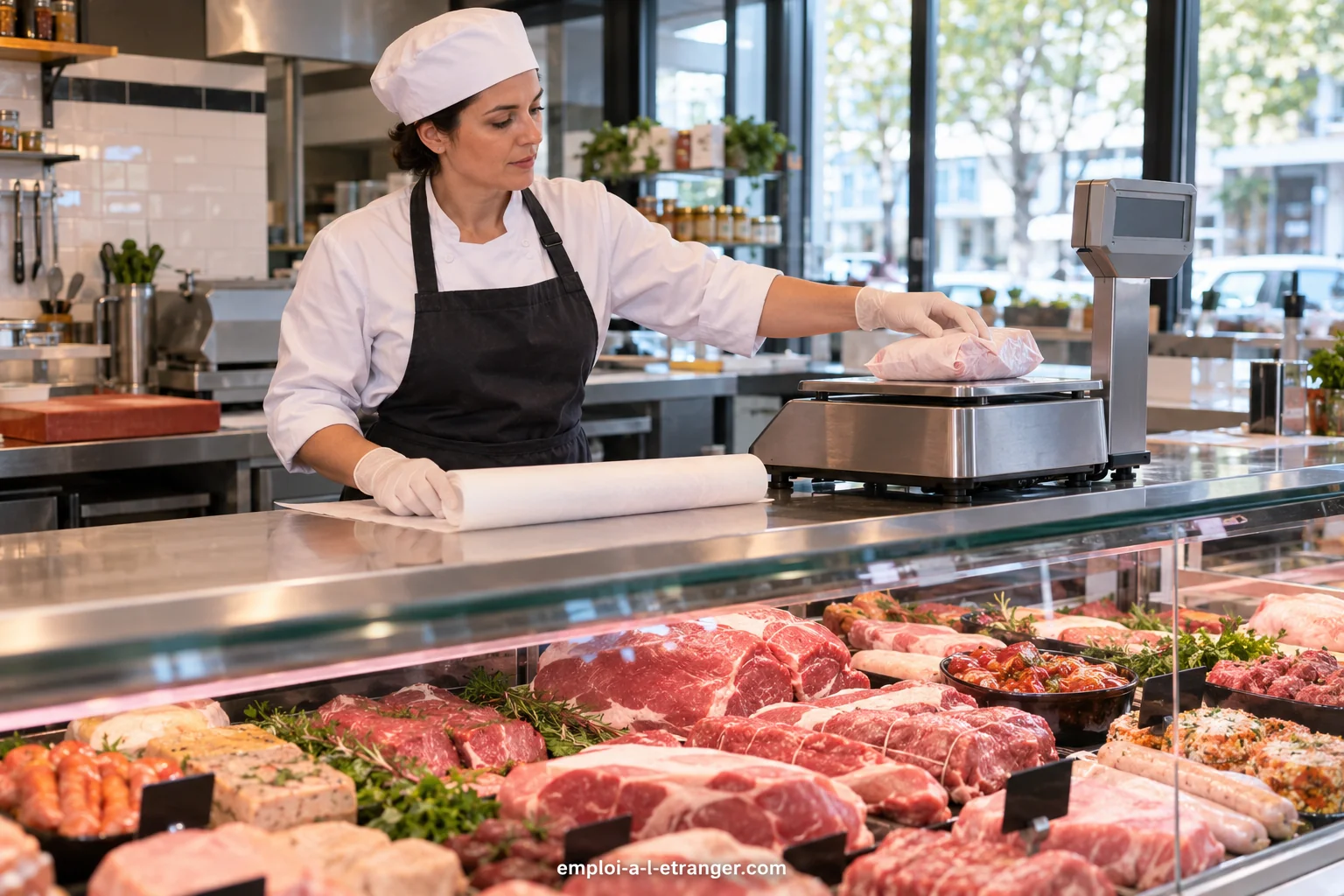
Three very different workplaces under one job title
Boning and cutting in large volumes happens on a production line, at a steady pace, with repeated movements and strict instructions. Artisan production of cured meats, ready meals or sausages calls for a more versatile pair of hands and a feel for recipes. Shop work adds customer advice and day-to-day contact with the public.
These roles do not draw on the same strengths or the same stamina. Someone who loves making things from scratch will usually be happier in a small processing workshop. Someone comfortable with a fast rhythm may do well in industry. Start by asking yourself what you want to do with your hands and who you want to serve.
A short example helps. Imagine a butcher used to the traditional counter of a supermarket. She enjoys advising shoppers but finds repetition hard to bear. She would probably be better off in a neighbourhood shop or a specialist chain than at an industrial cutting plant, even one that looks better paid on paper. Run the same exercise on your own career before you send out applications.
Describing the species, techniques and cuts you know
A recruiter wants to know what you have actually worked on: beef, pork, lamb, poultry, game. Spell out the operations you carried out, such as boning, trimming, tying, mincing, vacuum packing, or making pâtés and hams. Cut names differ from one country to the next, so also note what each cut is used for.
List the tools and machines you have handled: knives, saws, grinders, stuffers, slicers. Mention your usual production pace without inventing figures, but do say what scale you worked at: a small shop, a workshop with several staff, or an industrial site. That one detail lets the employer judge your independence straight away.
- Species and cuts you have worked with
- Cutting and production operations
- Machines and tools you have handled
- Production scale of the site
Traceability and hygiene: a shared language you must prove
In the meat trade, traceability is what keeps products safe. Explain how you followed batches, checked temperatures, read labels and reported anything unusual. If you took part in a food safety plan or an official inspection, state your exact role in it.
Hygiene requirements, mandatory training and workwear vary from country to country. Ask which certificates the employer expects and whether it arranges them before you start. Never claim a qualification you do not hold: it is easy to check, and a false claim closes the door at once.
Cold rooms, pace and heavy loads: the physical reality
This is work done standing, in chilled rooms, handling heavy pieces and repeating precise movements for hours. Before you accept, ask about the usual temperature in the workrooms, how long you would spend in the cold store, how often breaks are given and how loads are moved.
Also ask about protective equipment: cut-resistant gloves, aprons, safety footwear, ear protection on noisy lines. Who supplies it, who replaces it and who cleans it? A serious employer answers without hesitation. Vague replies on these points sometimes point to a workplace where safety comes second.
Practical tests and trial periods
Many employers ask for a demonstration: bone a cut, trim even portions, prepare a simple product. Practise in the conditions the employer describes, ideally with similar knives. A clean, quick demonstration with little waste is worth more than any certificate.
Find out whether the trial is paid, how long it lasts and whether it takes place at the employer’s own premises. A long unpaid trial, or repeated trials with no job offer, should make you wary. Get the terms of any probation period confirmed in writing before you start work.
Working the counter: local products and customers
For a counter job, cutting skill alone is not enough. You need to know local product names, how customers like to cook, and which cuts are in demand at different seasons or festivals. A French-trained butcher may impress with technique but must also learn the vocabulary shoppers use in the new country.
Customer service can be learned: advising on cooking times, suggesting a substitute cut, explaining where the meat comes from. Prepare a few useful phrases in the local language, and spend time watching how nearby shops operate before you apply.
Where to look and how to compare employers
The big meat producers post vacancies on their careers pages; Danish Crown and JBS are examples. Specialist platforms for hospitality and food trades, such as Hosco, also list jobs. In every advert, check the website, the location and the exact position.
Compare employers on concrete points: whether housing is offered, working hours, training and prospects for progression. If you can, speak to a former employee or a colleague in the trade. An anonymous industrial site in a remote area comes with different constraints from a workshop in town, and the commute and housing weigh heavily on daily life.
Contract, housing and paperwork to check
Ask for a written contract showing the exact job title, workplace, hours, pay and any deductions. If housing is provided, find out the price, the location and the terms for moving out. An offer that looks simple can hide large deductions from your wages.
For residence and work conditions, consult the competent authority in the country concerned. Rules change with nationality and contract type. Do not leave before you hold the documents you need, and refuse any request to pay an intermediary in order to get the job.
Frequently asked questions
Do I need a specific qualification to work as a butcher abroad?
Not always. Many employers look first at experience and at how you perform in a practical trial. Some countries or companies do ask for a training certificate, especially in food hygiene. Ask the employer what it requires and check with the local health authorities for any obligations specific to the trade.
Is factory work very different from working in a butcher’s shop?
Yes. In a plant you perform a limited number of movements at high speed within a tightly controlled framework. In a shop or small workshop the work is more varied and includes customer contact or complete product making. Choose according to whether you prefer routine or versatility.
How should I prepare for a practical test during recruitment?
Ask in advance what will be assessed: boning, portioning, production. Practise on comparable cuts with well-sharpened knives, keeping your hygiene and your workstation tidy. Recruiters watch safe handling, consistency and time management as much as raw speed.
Can an employer make me pay for being recruited?
A genuine recruitment process does not ask candidates for money to obtain a job, a visa or housing. If an intermediary demands fees, first check that it officially exists and that the vacancy is real by contacting the company directly. If in doubt, pay nothing and ask the authorities of the country.