Choosing the pieces that represent your level
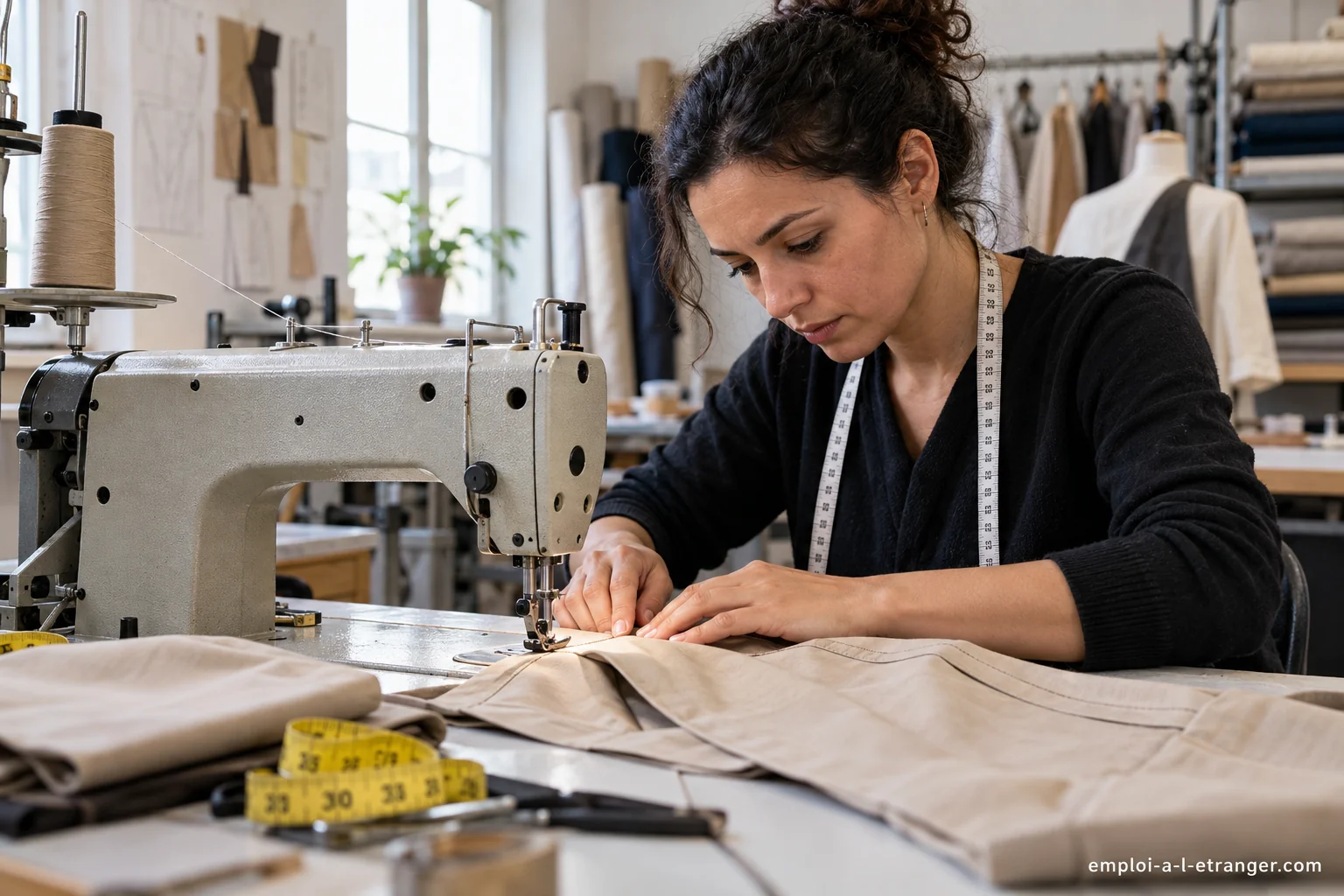
Select six to ten pieces that show different skills: assembly, inside finishing, fitting, work with delicate fabrics. For each piece, give the material, the main technique and the time it took. One explained piece is worth more than a series of photos without comment.
Show close-up views: seams, hems, buttonholes, linings. The owner of the design must have approved their publication, whether that is a client or a fashion house. Without that agreement, replace the photo with a personal piece. Recruiters distrust portfolios full of borrowed pictures.
Prepare a second, shorter file in a light format that you can send by email without clogging the recruiter’s inbox. Keep the full version for a video interview or a meeting at the workshop.
- Material and technique of each piece
- Finishing and inside details
- Estimated making time
- Permission to use the images
Alterations, made-to-measure, production or prototypes: find your place
Alterations demand speed and precision on existing garments. Made-to-measure involves taking measurements, fittings and a relationship with the client. Production sewing repeats movements from a pattern at a factory pace. Prototyping requires understanding a design and suggesting technical solutions.
Say which of these worlds suits you best and which ones you have already practised. A recruiter looking for a prototype sewer will not shortlist a file focused only on quick alterations, however excellent. Choose adverts that fit your practice and adapt the presentation.
Machines, stitches and fabrics: the details that reassure
Name the machines you have used: lockstitch, overlocker, coverstitch, automatic buttonhole machine, pressing iron. Mention the stitches and finishes you master, the fabrics you handle (silk, wool, leather, knits, technical fabrics) and how you look after your equipment. These items describe your independence.
An unfamiliar machine does not rule you out if you say so clearly and explain how you adapt. A workshop abroad often trains people on its own equipment. It is better to admit a margin for learning than to claim a mastery that would collapse during the practical trial.
All-rounder or specialist: what the workshop wants
A small workshop often seeks someone who can move from alterations to assembly and finishing. A large organisation may instead ask for a specialist in one operation, such as inserting linings, collars, sleeves or leatherwork.
Get the tasks clarified before you send your file. If the advert simply says sewer without more detail, ask how the work is divided between assembly, pressing, inspection and packing. A clear answer saves you from finding on day one a job very different from the one you imagined.
Ask whether pay is a fixed salary, hourly or by the piece. Piecework favours quick hands but can penalise a newcomer to the workshop; it should be explained with written rates before any commitment.
Quality control, pace and technical trials
Ask how quality is checked: inspection by a supervisor, a defect chart, return of non-conforming pieces. Find out about the pace expected, the number of pieces per day, any piece-rate payment and how delays are handled.
Many workshops set a technical trial: making a hem, setting in a sleeve, assembling a small item. Ask about its length, its conditions and any pay. Practise reproducing movements against the clock, with a pattern you do not know, as on the day of the trial.
Patterns, measurements and local trade vocabulary
Patterns, sizes and measuring systems vary from one country to another: centimetres or inches, different size charts, cutting marks specific to a fashion house. Ask to see a sample spec sheet before you arrive so that you understand the abbreviations and symbols used.
Learn the vocabulary of the trade in the language of the workshop: types of seams, trimmings, fabrics, faults. A few dozen terms are enough to follow instructions. Keeping these words in a small bilingual notebook shows a manager that you want to understand properly.
How instructions are passed on and changes mid-production
In a workshop, instructions sometimes change during a run: a detail altered, a late fabric delivery, a correction requested by a customer. Ask how these changes are communicated: written sheet, message, start-of-day meeting, demonstration by the supervisor.
If the workshop language is not your own, agree on a system of repeating back: you restate the instruction before carrying it out and ask for a demonstration when in doubt. This habit prevents pieces being redone and shows an attentiveness that workshop managers value.
If customers come to the workshop, ask also whether you will take part in fittings. This side of the job calls for tact and enough command of the language to rephrase an alteration request.
Looking for vacancies and checking that a workshop is real
Vacancies appear on the careers pages of fashion houses and luxury groups, on platforms specialising in fashion and on the sites of independent workshops. Compare the advert with the company’s official website, the collections it shows and the reviews of former employees.
Be wary of offers with no workshop name, those that ask for payment to secure a place or that demand complete samples before any contract. A serious employer presents its business, offers an interview, describes the job in writing and respects the ownership of your personal designs.
Frequently asked questions
Can I show pieces made for a couture house?
Only with the permission of the owner of the design or of the house. Many employers impose confidentiality on collections. Without written agreement, show personal pieces instead or describe your tasks without publishing images, naming a contact who can confirm your role.
Is a sewing qualification essential?
Not always. Many workshops judge the portfolio, the references and the technical trial first. Some fashion posts do require recognised training, though. Ask the employer and keep your diplomas, placement certificates and work certificates ready to show when needed.
How do I prepare for a technical trial?
Rehearse the basic operations to be done quickly and cleanly: hem, zip, collar, sleeve. Practise with a stopwatch and an unfamiliar pattern. Ask in advance about the duration, the equipment supplied and any pay, then bring your own tools if custom allows.
Is sewing work abroad well paid?
Pay varies greatly with the country, the city, the type of workshop and the level of specialisation. Do not rely on general comparisons. Ask for the salary, how it is calculated and the benefits in writing, then compare them with the cost of living where you will work.