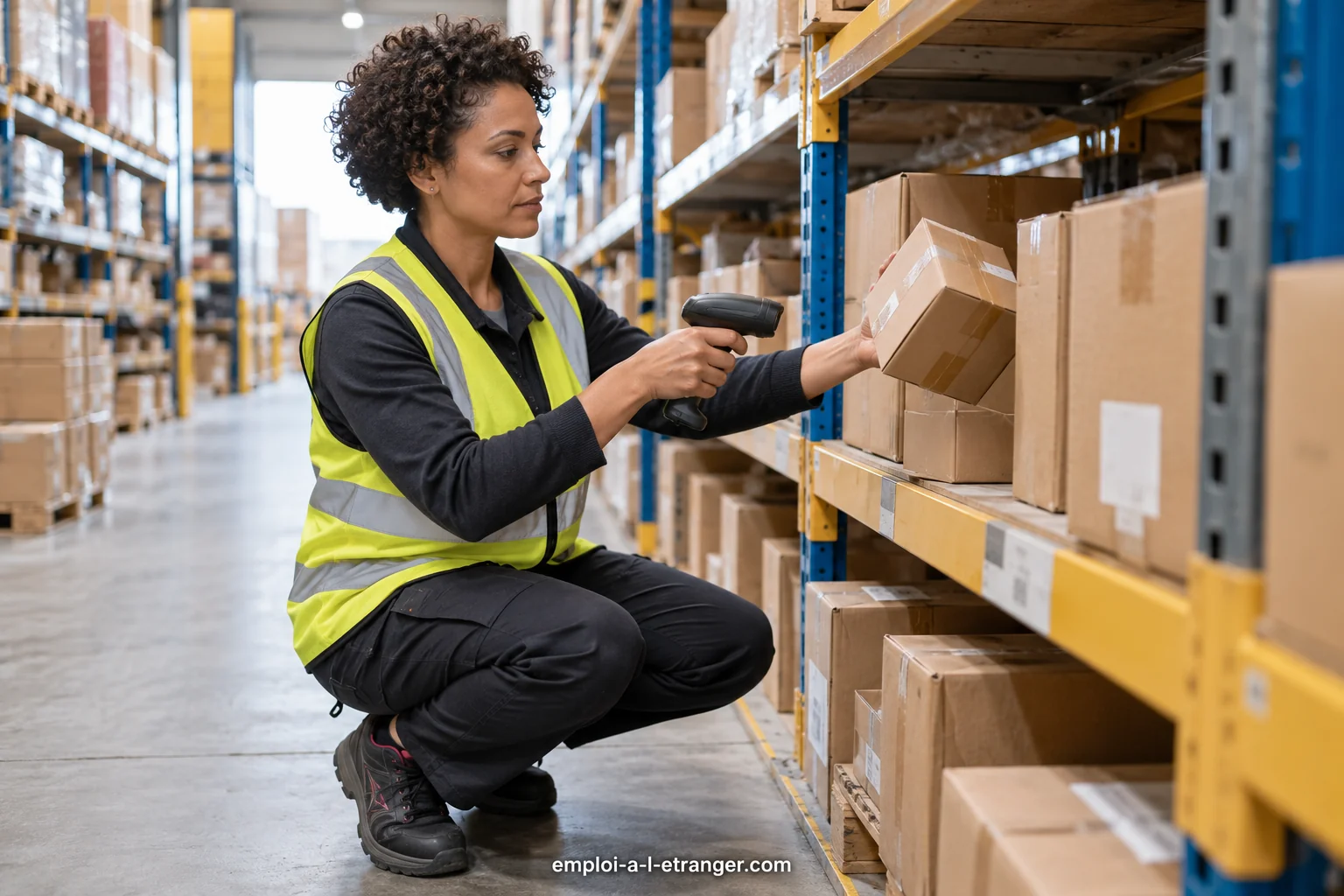
What an order picker actually does
The picker collects the items on an order, checks references and quantities, packs them and drops the parcel at the dispatch area. The job looks simple, but a mistake is expensive: a wrong item means a return, an unhappy customer and a second shipment. Reliability therefore counts as much as speed.
Abroad, the job title varies: picker, order selector, warehouse operative. Some offers bundle picking, receiving and putaway. Read the list of tasks rather than the title, and ask whether the post includes driving trucks or only manual picking.
- Picking from a list or a scanner
- Checking quantities and references
- Packing and labelling
- Reporting stock discrepancies
Describing your tools and picking methods
A recruiter wants to know what kind of environment you have worked in. Mention the type of picking you have done: by order, by wave, by zone or voice-directed. Name the devices you used, such as scanners or headsets, and the warehouse management system if you know it. These details reassure more than a general sentence about being serious.
If you reduced errors or met targets, say how. An honest example is worth more than an invented percentage. State the size of the site and the volume handled as well, even roughly, so the employer can place your experience against its own warehouse.
Also ask how returns and fragile goods are handled. An online retail warehouse receives many returned parcels, which must be checked, restocked or scrapped. If you have already handled this reverse flow, mention it: it is a less common skill than plain picking and it sets your application apart.
Pace and accuracy: showing you can balance them
Warehouses measure productivity, often in lines or parcels per hour. A candidate who understands these indicators reassures the employer. But pace must never override safety or quality. Explain how you keep a steady rhythm while still checking what you pick.
Give an example of a time you reported a problem: an unreadable label, missing stock, a damaged pallet. It shows that you do not hide an anomaly to keep up your numbers. Warehouse managers look for people who raise the alarm early, because it prevents heavier losses further down the chain.
Food, textile or industrial warehouse: three different worlds
A cold-storage warehouse means low temperatures, suitable clothing and regulated breaks. A textile or fashion site handles large volumes of small items and frequent returns. An industrial warehouse deals with heavy and sometimes dangerous parts. Physical demands and risks change from one site to another.
Ask concrete questions: working temperature, weight to be lifted, time spent standing, rotation of tasks. A place that looks attractive on paper can become punishing because of the cold or repeated lifting. Choose according to your real physical condition, not salary alone.
Permits, training and equipment
Driving a forklift, an electric pallet truck or a stacker often requires recognized training or an employer’s authorization, depending on the country. A picker without that qualification should not agree to drive. State in your application what you really hold, with the date and the issuing body.
If the job requires a certificate you do not have, ask whether the employer pays for it and how soon. Check the protective equipment supplied too: safety shoes, gloves, cold-weather clothing. A serious employer provides them or explains clearly what remains your responsibility.
Hours, shifts and commuting: the everyday questions
Many warehouses run in shifts: morning, afternoon, night and sometimes weekends. Ask for the typical schedule, how rotations are decided and how night hours or public holidays are paid. Peak periods, before the holidays for example, can stretch the working day.
Logistics zones are often far from the city centre. Check how you will reach the site, especially for a dawn or overnight start. Poorly planned transport can cancel the benefit of a good wage. Some companies run a shuttle; ask for its exact timetable.
Reading an offer from a large logistics group
Big operators such as Amazon, GXO or CEVA Logistics post their openings on dedicated careers pages. These pages often state the site, the type of contract and the basic conditions. Read them directly on the employer’s page rather than through a third-party relay, to limit the risk of outdated or forged ads.
Note the difference between a direct employer and a temp agency working on the same site. The contract, pay and rights may differ. Ask who pays you, who supervises you day to day and what happens when the assignment ends. A permanent post and a temporary one do not offer the same security.
Contract, housing and budget: before you leave your country
A picker’s job is rarely paired with a high salary, so look at net income against the cost of housing, transport and meals. Work out a cautious monthly budget. If the employer offers accommodation, ask the price, the duration and what happens to the housing if the contract ends.
Make sure you are allowed to work in the country and that the contract is written in a language you understand, or translated. Do not pay an intermediary to get a warehouse job. A serious recruitment never asks the candidate for an upfront payment.
Frequently asked questions
Do I need a qualification to become an order picker?
Not always. Many employers hire on experience, reliability and physical fitness. Some ask for training or a license to drive equipment. The working language also matters, since you must follow safety instructions. Check the requirements in the advertisement and with the recruiter.
Can I apply without speaking the local language?
Sometimes, in multilingual teams, but understanding safety instructions and labels is essential. State your level honestly and ask which language training sessions are given in. Some basic practice of the local language makes integration and promotion easier.
What is the difference between a picker and a forklift driver?
The picker collects and packs items, often on foot or with small equipment. The forklift driver operates lift trucks to move pallets, which requires training and authorization. Some posts combine both: say what you can do and what you are authorized to drive.
How can I check that a warehouse offer is genuine?
Find the advertisement on the employer’s official careers page, verify the site address and ask for a written contract before any trip. Refuse to pay for the job. If an agency is involved, ask for its name and status, then confirm it exists with the competent authority.