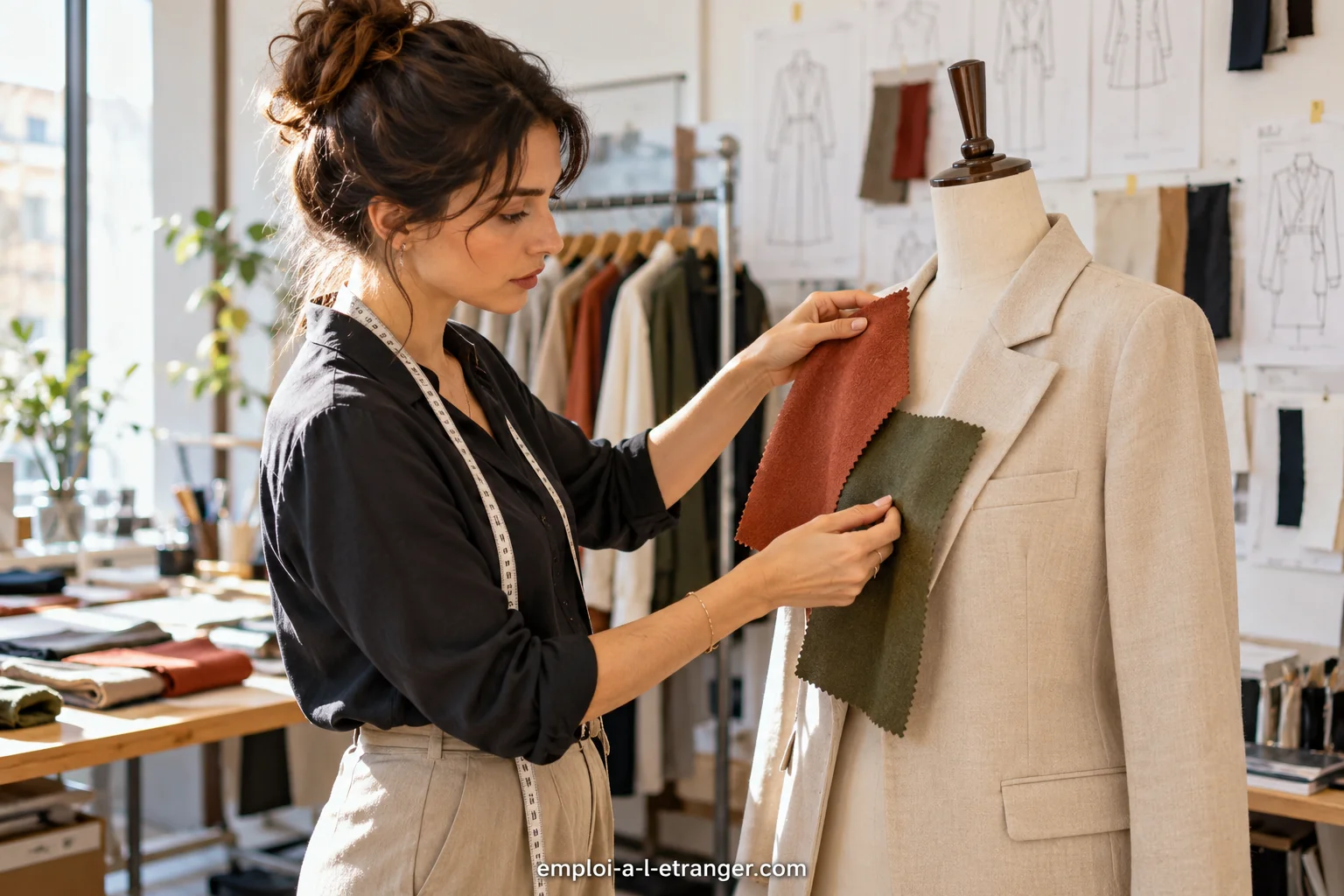
What recruiters actually read in a fashion portfolio
A portfolio is not a photo album of attractive images. Recruiters look for a common thread: how an idea becomes a silhouette, how a fabric guides a cut, how a budget limit changes a design. Show the progression, not only the finished result.
Think about format. A light digital file that reads well on a laptop and on a phone works best, together with a printable version for in-person interviews. Name your files clearly and number the pages, so a rushed recruiter can find your main project within seconds.
Keep to a coherent selection of projects, often between three and five, each presented with the same care. An overlong file tires the reader and dilutes your message. One complete project is worth more than a dozen loose boards whose origin and purpose the reader cannot guess.
From visual research to finished garment: show your process
Open each project with research: references, mood boards, a colour palette, fabric choices. Continue with sketches, the variations you dropped, and the reasons behind the final choice. This stage reveals your ability to decide, an essential quality when a collection contains dozens of styles.
End with the outcome: the sample garment, fitting photos, and the adjustments you made. If a project never went beyond the drawing stage, simply say so. Employers prefer honest work to a presentation that suggests a production run which never happened.
- Research boards and colour palette
- Sketches and rejected variations
- Technical drawings with construction details
- Fitting photos and the adjustments made
Customer, price and manufacturing constraints
A designer does not draw in a vacuum. You are thinking about a customer, a price position, deadlines and the factories that will make the product. For each project, state the target customer, the intended price range and the technical limits you met: complex seams, the availability of a fabric, minimum order quantities.
Explain how you changed a design when production demanded it. The ability to simplify without betraying the idea reassures an employer who sells clothes, not sketches. It also shows that you understand the conversation between design, pattern making and suppliers.
Tech packs and working with the pattern maker
A technical drawing, usually delivered as part of a tech pack, describes a garment precisely enough for a workshop to make it: measurements, stitching, finishes, fabrics, trims. Include at least one complete example in your portfolio. It proves that you can pass an idea on to the people who will build it.
Describe your exchanges with the pattern maker too: pattern corrections, changes after a fitting, decisions taken together. Recruiters want to know whether you work well with technical colleagues. Do not present pattern making as a mere execution step. Present it as a partner whose constraints you respect.
Scope of the role: one line, one category or a whole collection
Abroad, a designer’s job can cover very different responsibilities. Some people create a complete line, others a product category such as denim, knitwear or leather goods, and others adapt the directions given by a creative director. Room for decision-making varies with the size of the company.
Ask who you report to, who approves the choices, how many styles you handle each season and how much original design the position involves. A role with little real creation may suit you as a first job, but not if you aim to lead a collection.
Fittings, approvals, suppliers and software
Ask for details of the fitting rhythm, the approval stages, the people who decide and the time allowed. This tells you whether the company is organised or whether the pressure will land on you. Also ask about the relationship with fabric and trim suppliers: who selects, who negotiates, who checks quality.
Find out which software is used for drawing, tech packs and collection management, and which language is spoken with the workshops. If you do not master a tool, say so and explain how you plan to learn it. That frankness is better received than an overstatement exposed during a skills test.
Confidentiality: what you may and may not show
Designs created for an employer often belong to that employer, and some collections are covered by non-disclosure clauses. Before including them in a portfolio, check what you are allowed to show. If in doubt, ask for written permission or replace the project with personal work.
In an interview, specify your role in each project presented: concept, adaptation or assistance. If some elements stay confidential, say so calmly. A professional who respects current commitments inspires trust in a future employer, who hopes you will do the same for them.
Finding vacancies and checking employers
Specialist platforms such as FashionUnited post vacancies worldwide, and luxury groups such as Kering or LVMH describe their careers and openings on their own recruitment pages. Applications there are numerous, so tailor your portfolio to the fashion house you are targeting instead of sending a generic file.
Before accepting, confirm that the company exists, the type of contract, the length of the probation period and your right to work in the country. Be wary of internships disguised as jobs and of offers that ask for payment. Request written confirmation of the conditions before leaving your current job, along with proof that the position is funded and open when you apply.
Frequently asked questions
How many projects should a fashion designer portfolio include?
Three to five well-documented projects beat a long series of images with no context. Each project should show the research, the choices made, the technical drawings and the result. Adapt the selection to the employer you are targeting: a portfolio that resembles their products will be understood better than a general file.
Do I need to speak the local language to work as a fashion designer abroad?
English is often the common language in fashion, but daily dealings with workshops and suppliers may take place in the local language. Ask who you will work with, in which language, and whether the company offers language support.
Can I show designs I created for my current employer?
It depends on your contract and any confidentiality agreements. Check with your employer what you may share. Without permission, present personal projects or older work that is not protected, and explain your responsibilities verbally without revealing sensitive details.
How can I tell a genuine design job from a misleading offer?
Check the brand name, the company address and the recruiter’s contact details. Be wary of offers that ask for money, extensive unpaid work or a quick decision without a contract. Compare the advert with the official careers page and ask for the conditions in writing before you commit.