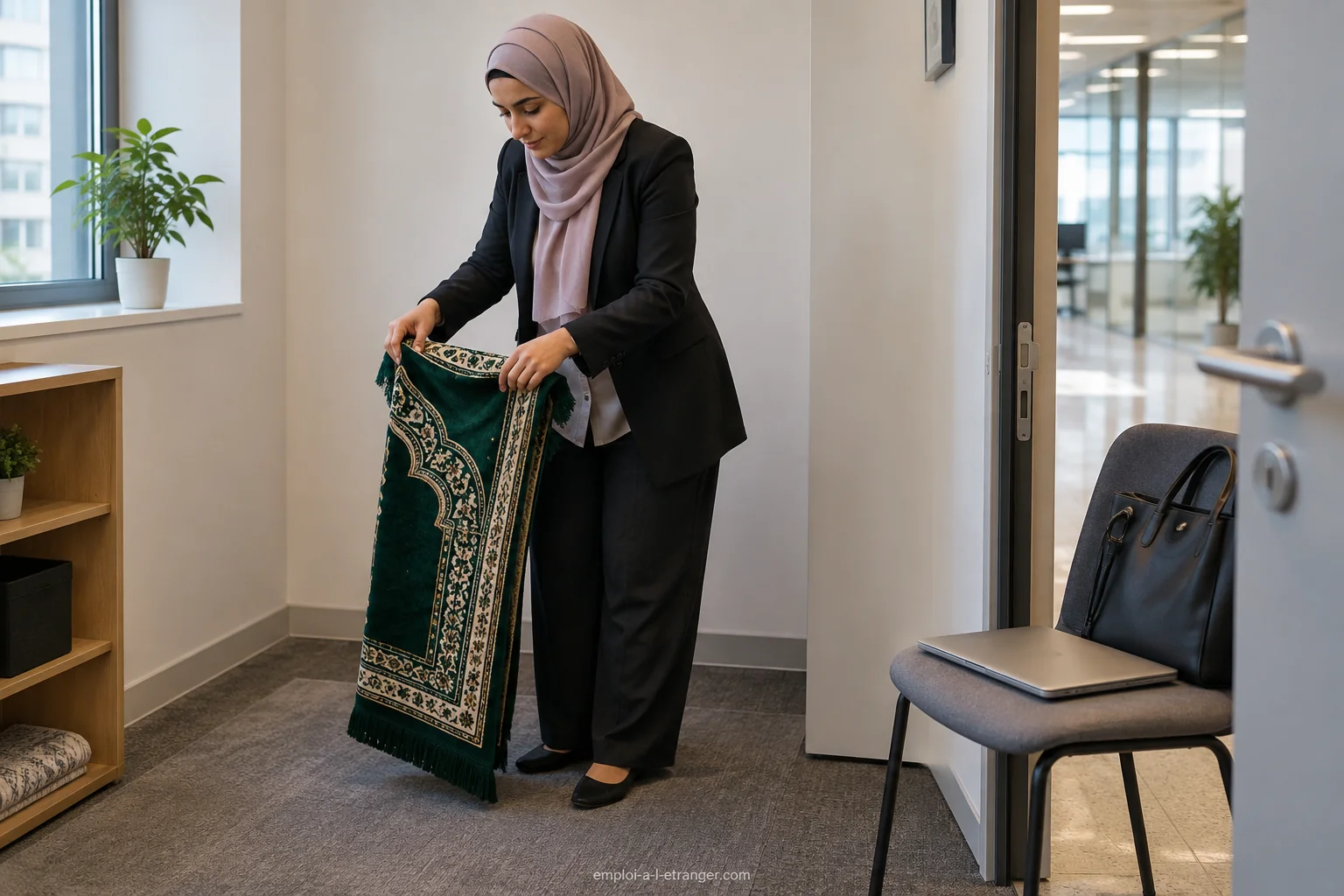
Working abroad as a Muslim involves thinking through prayer, food, dress and observance, raising them with employers and finding local support. An overseas application is first of all about what you can do. Your qualifications, experience and results are what an employer is assessing, so build your CV and interview answers around them. Religious practice becomes relevant only where it affects practical arrangements. It is up to you whether and when to raise it, and you can do so after you have shown clearly what you offer.
Start with your skills and keep the focus on the job
Thinking about this in advance helps you stay confident and keeps conversations constructive.
Practising how you would describe a request in two or three calm sentences makes it easier to speak naturally during an interview.
Treat the process as a conversation between two parties who both want a good working relationship.
Identify which practical needs matter most to you
Different people observe their faith in different ways. For some, the priority is a place and a few minutes for prayer during the day. For others it is food, dress, flexibility during Ramadan or time off for religious festivals.
Write down the points that are truly important and those on which you could be flexible. This gives you a clear picture before any discussion, so that you can explain a request simply instead of in general terms.
Be realistic about the type of workplace. A site visit, a shift pattern or a customer-facing role may affect what is possible.
Some people find it useful to note which needs are essential and which are preferences, because it clarifies where they can compromise.
Raise requests at a sensible moment and in a practical way
Many candidates prefer to wait until they have an offer or are in the final stage before discussing arrangements. Others raise them earlier. Choose what feels right for the situation.
When you talk to the employer, be specific: say what you need, how long it takes and how you would fit it around your tasks. Practical, short requests are easier to consider than broad statements.
Listen to the answer and ask what options exist. A respectful, solution-focused conversation usually works better than demanding a fixed outcome.
Remember that employers vary widely in experience. A manager who has never received such a request may simply need a moment to consider the practical details.
Find out about the workplace through reliable sources
Do not assume that a country or an employer will be easy or difficult. Look at the company’s published policies, speak to current or former employees if you can and read independent information about the sector and city.
Ask whether there is a quiet room, a prayer space or flexible breaks, and how colleagues usually handle religious holidays. Employers who have dealt with these questions before tend to answer simply.
Remember that practice can differ between workplaces in the same city.
If the employer offers to put arrangements in writing, keep a copy so that both sides share the same understanding.
A short written note of what was agreed about arrangements can prevent confusion when your manager or team changes.
Check the local framework for fair treatment
Laws and practices on religion at work vary from one destination to another. Some places have detailed equality rules, while others rely on employer policy or custom.
Before accepting, consult the competent equality, labour or employment body for the destination and read what it says about religion, working time and leave.
Avoid relying on blanket claims, whether they promise full accommodation or warn that nothing is possible. The real position depends on the jurisdiction and the circumstances.
Where the position is in a country with a different working week or holidays from your own, check how this affects religious observances through the year.
Plan for food, dress and daily routine
Think about how you will manage meals at work, during travel and at company events. Ask colleagues or the employer about options in the canteen or nearby, and be ready to bring your own food if needed.
If you wear particular clothing for religious reasons, check whether the role has safety, uniform or customer-contact requirements, and discuss any adjustment in advance.
Make a simple routine for your first weeks so that you can concentrate on learning the job.
If you are travelling with family, think about schools, shopping and health services as well, since they influence how settled you feel.
If your job involves business travel, check in advance how prayer, food and time zones will be handled on the road.
Look for community and local support
Moving to a new country is easier when you know where to find support. You may wish to locate a nearby place of worship, a community association or a group of other newcomers.
These contacts can offer practical advice on housing, schools, food shopping and what to do if something goes wrong. Choose the ones that suit you, and treat the information as a supplement to official sources.
Online forums can be useful, but weigh each opinion carefully, since experiences vary widely.
Asking people who have moved to the same place what they wish they had known can save you time and avoid avoidable difficulties.
Keep records if a difficulty arises
If a problem occurs, stay calm and record what happened: dates, names, what was said and any messages. Keep a copy of your contract and workplace policies.
Start by raising the matter informally with your manager or human resources team, as many issues can be resolved this way.
If that does not work, contact the relevant equality or employment body or seek independent legal advice. Knowing the process in advance makes it much easier to act.
Staying informed about your rights, and keeping the contact details of the relevant bodies in an easy place, gives you reassurance without needing to expect problems.
Seeking advice from a trusted community or professional contact before taking formal steps can help you choose the best approach.
Frequently asked questions
Should I mention my religious needs in my CV or application?
That is a personal choice. Your CV should focus on skills and experience. Religious needs can be raised later, once you understand the role and the workplace. If you do mention it earlier, keep the wording brief and factual so that your skills remain the focus.
How do I ask for time to pray at work?
Explain simply what you need, how long it takes and how you would arrange it around your duties. Offering a practical solution makes the request easier to consider. It also helps to mention any flexibility you have, for example by taking breaks at different times.
What if I am unsure about a country’s rules?
Check the official equality, labour or employment body in the destination and read its guidance. Do not rely only on stories from other people.
Who can help if I am treated unfairly?
Begin by speaking to your manager or human resources team. If necessary, contact the competent public body or seek independent advice, bringing your records with you.