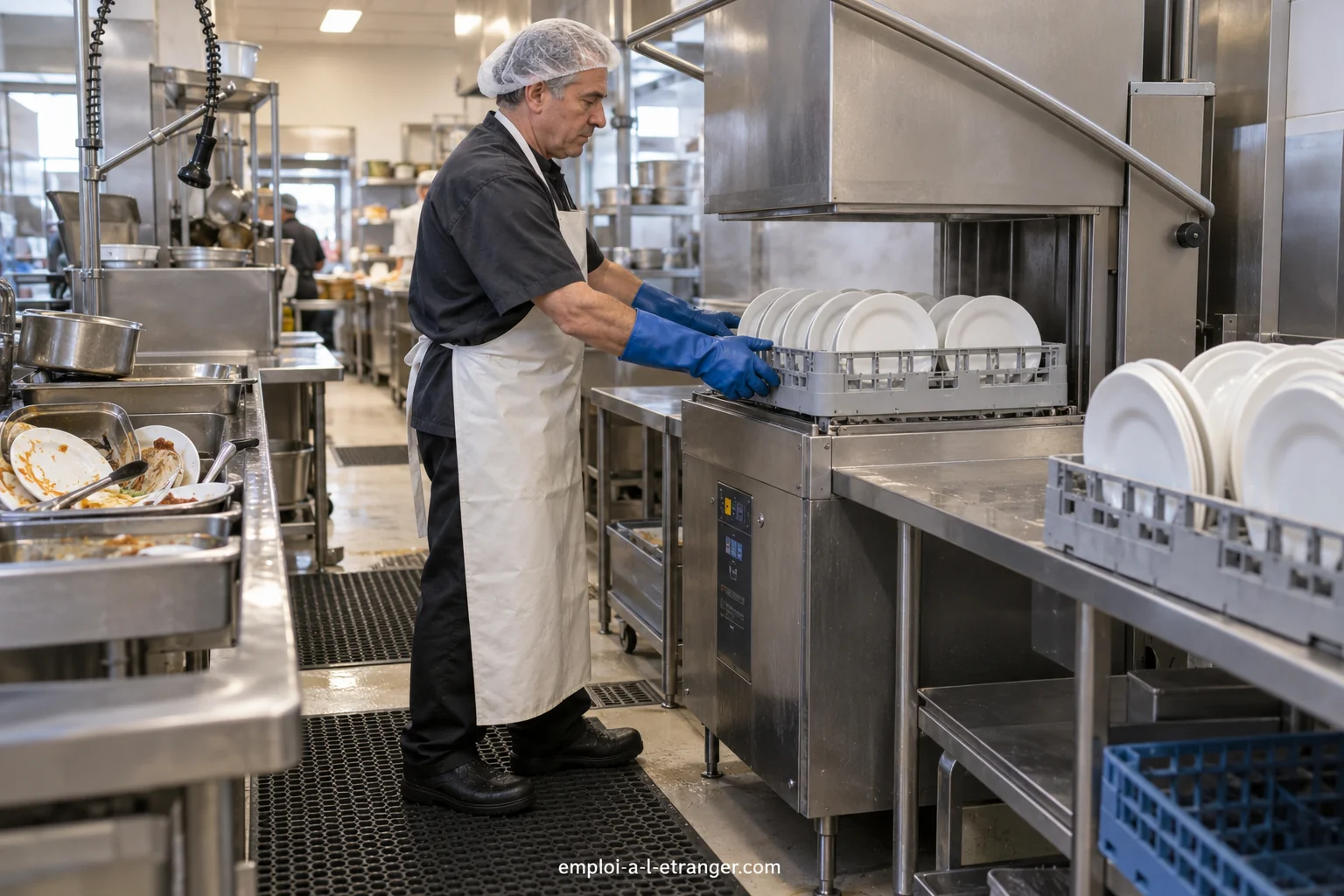
The porter’s part in running a kitchen
The kitchen porter keeps clean dishes, glasses, serving plates and utensils moving during service. When the porter falls behind, the kitchen stops for lack of plates or pans. The work is physical, fast and driven by the peaks of lunch and dinner, with quieter moments used for tidying and cleaning.
The post is often a first way into hospitality abroad. It asks for little language at the start, but a great deal of consistency. Employers appreciate punctuality, cleanliness and the ability to work with cooks under pressure. A reliable porter is sometimes trained afterwards for other kitchen tasks.
What a porter’s application should show
A useful application describes how you work rather than listing general qualities. Mention the machines you have used, the type of venue, the approximate number of covers, your usual hours and how you coordinated with the kitchen. A simple example, such as getting through a busy service without letting dishes pile up, is worth more than a stock phrase.
Attach references if you have them: a head chef, a restaurant manager or a seasonal employer. State when you can start, how long you want to stay and whether you can work evenings or weekends. Finally, give your language level honestly, because the employer needs to know how to give you instructions.
- Machines and cleaning products already used
- Type of venue and volume of covers
- Availability for evenings and weekends
- References from a chef or a manager
Dishwashing machines, the flow of crockery and how the pot wash is run
A hood-type dishwasher, a conveyor machine and a manual sink do not involve the same work. Ask which set-up exists, how many people run it and how the dirty items arrive. Organisation matters a great deal when several returns bunch together in a short time and several stations depend on the same flow.
Hygiene procedures vary too: washing temperatures, dosing of products, glass sorting, waste handling. Some venues train you in half a day, while others expect you to learn by watching. Ask about initial training so that you never handle a chemical or a machine without being shown how.
Other possible duties: pots and pans, floors, deliveries
Depending on the size of the venue, the job may include cleaning cookware, floors, cold rooms and grease traps, or taking out the bins. In some restaurants the porter also helps receive deliveries. These extra tasks change the workload a great deal.
Ask for the full list at the interview and have it confirmed in the contract or the job description. A role that begins with dishwashing but gradually spreads to general kitchen cleaning with no change in pay is something to clarify from the start, calmly and in writing.
Heat, chemicals, protective gear and breaks
Dishwashing is exposed to damp heat, splashes and cleaning chemicals. Ask which equipment is provided: gloves, apron, non-slip shoes, eye protection. Find out who replaces them when they wear out. A serious employer does not make you pay for compulsory protection.
Look into how breaks are arranged: length, place, the chance to drink water, access to a changing room. In an intense service, a real break protects your health and the quality of your work. If the pace is very high, ask how the team takes turns and what is planned in case of illness or injury.
Closing hours, meals and getting home late at night
The porter is often the last person to leave the premises. Ask for the usual finishing time, what happens when clearing up runs over and how extra time is paid. Where public transport stops early, a late journey home becomes a real practical and financial issue.
Ask about meals as well: are they supplied, free of charge, or deducted from pay? For a job abroad, get clarity on travel between your accommodation and the restaurant, especially at night. Housing close to the workplace, or organised transport, can greatly improve your quality of life.
Contract, pay and tips
Have the salary, the payment frequency, the weekly hours, the probation period and the days off put in writing. Check whether night or weekend hours earn a premium. Simple, clear terms are the mark of a decent employer, even for a job presented as an entry-level post.
In some countries tips are shared with the whole team, including the dishwashing staff, and in others they are not. Ask how they are divided and whether they count towards the pay quoted. Do not let a verbal promise take the place of the contract: what is not written down is hard to claim afterwards.
Finding a post and making sure you may legally work
Hotel chains and specialist platforms advertise porter and kitchen assistant roles in several countries. Independent restaurants often recruit through local adverts or speculative applications. Compare several offers, taking account of housing, meals and the cost of living in the city concerned.
Check your right to work in the country before you leave. A job offer is not a work permit, and accepting undeclared work leaves you without protection in case of an accident or non-payment. Ask the competent authority and the consulate, then keep a copy of all your documents.
Frequently asked questions
Do I have to speak the local language to be a kitchen porter?
Not necessarily at first, since instructions are often simple and visual. But understanding safety words, product names and requests from the kitchen remains essential. State your level sincerely and learn the basic restaurant vocabulary quickly.
Is dishwashing a good way to start in hospitality?
Yes, it is a common entry point because it needs few qualifications at the start. It lets you watch how a kitchen runs and show that you are dependable. Some venues later train their porters for other posts, but that is never guaranteed and depends on the employer.
What should I ask about hours before accepting?
Ask for the usual start and finish times, the number of days worked, the breaks and the pay for extra time. Also ask how you get home when service ends late. Have these points written into the contract to avoid a gap between the promise and the practice.
Is undeclared work acceptable to get started?
No. Working with no contract or permit leaves you unprotected in case of an accident, a dispute or non-payment, and it can affect your right to stay. Insist on a written contract and check your right to work with the competent authorities before you start.