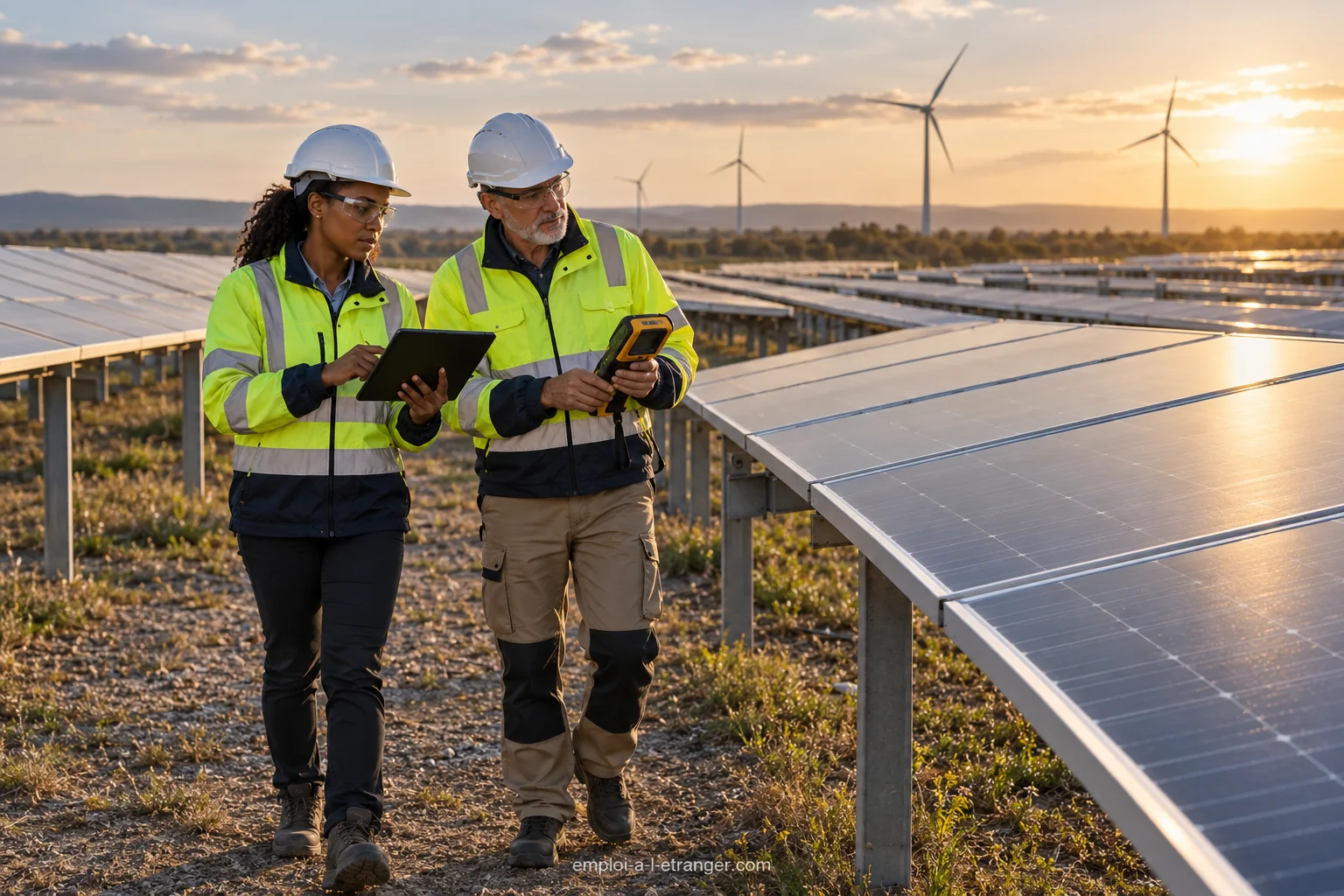
Four stages in a project’s life, four types of job
A wind or solar farm goes through development (site search, studies, permits), design (sizing, equipment selection), construction (site works, testing, commissioning) and operations (performance, maintenance, optimisation). Every stage employs engineers, but not for the same tasks.
Place your own experience on this timeline. A design engineer can quite reasonably apply for development, and a site engineer for operations, provided you show what carries over and what you still have to learn. An application that claims every stage at once lacks credibility.
A telling example: a design-office engineer who wants to move into operations can present their production-loss analyses and explain how they would help prioritise maintenance work. That explicit link between your studies and the daily life of a plant convinces more than a bare statement of interest.
- development and permitting
- design and sizing
- construction and commissioning
- operations and performance
Specify your technology and your own contribution
Onshore wind, offshore wind, photovoltaics, storage, hydrogen, biomass, hydropower: the trades and standards vary. Name the technology you know, then your precise contribution: an energy yield study, inverter selection, supervision of foundations, loss analysis, or commissioning of a grid connection substation.
Recruiters like to see the scale of a project in figures, without promises about results: approximate capacity, number of units, the phase you followed. Avoid describing the whole project as yours if you handled only part of it; in an interview, technical questions quickly reveal the gap.
Design office or site: two different ways of life
A design office job revolves around software, reports and meetings, and availability is tied mostly to submission deadlines. A site role demands physical presence, weather-dependent hours, on-call periods and sometimes temporary accommodation in an isolated area.
A comparable installation can therefore lead to two very different jobs. Ask about the split between office and field work, the length of site assignments, any rotations and compensatory rest days. These factors affect your personal life as much as the salary does.
Usual destinations and how often you will travel
Renewable energy is growing on several continents, often in rural, coastal or desert areas. Ask where the company operates, how many countries the team covers and whether the job means a permanent move or assignments of varying length.
For each destination, find out about security, access to healthcare, housing and communications by reading the travel advice from your foreign ministry. A distant assignment that is poorly prepared puts both the project and your health at risk.
Finally, ask how rest periods after a long assignment, return leave and the cost of tickets are handled. In several companies in the sector, these rules vary by project and country and do not always appear in the advert. Get them in writing before you accept, so that you can compare two offers calmly.
- countries and project regions
- length and frequency of assignments
- conditions of access to the installations
- health, safety and local assistance
Safety, certifications and technical language
Working at height, in confined spaces, in electrical zones or at sea requires recognised safety training. Ask which courses are required before you arrive, which ones the employer arranges and whether your current certificates are accepted in the project country.
Technical language is a second issue. Standards, reports, discussions with subcontractors and site instructions are often in English, sometimes in the local language. Prepare the vocabulary of your field and practise reading a specification in a foreign language.
Safety certificates often have a limited validity. Check their dates and arrange renewal before you leave for an assignment; otherwise you may be refused access to the site on the first day.
Dealing with suppliers, subcontractors and local authorities
A renewable energy project brings together turbine or module manufacturers, civil engineering firms, grid operators and local authorities. Your role may include reviewing deliverables, tracking deadlines, handling technical deviations or preparing regulatory files.
Ask where your responsibility for validation ends, who signs sensitive documents and how disputes with a subcontractor are resolved. Clarify also the place of dialogue with local communities, which is often decisive for a project to be accepted.
For a project funded by international bodies, extra environmental and social reporting requirements may apply. Ask whether you will contribute to those reports.
Support when you join a new project
An international assignment begins with an induction period: meeting your contacts, getting access to documents, visiting the site and training on internal tools. Ask how it is organised, who supervises you and when you are expected to work independently.
Clarify the tasks you will be given in the first months and those that will still be approved by a manager. A serious employer sets out this framework without being pressed, because it protects technical quality as much as your own responsibility.
Looking at turbine makers, developers and operators
Manufacturers such as Vestas or Siemens Energy, and energy companies such as Ørsted, post their vacancies on their careers pages, with the country, the role and the skills required. Other offers come from engineering consultancies, independent developers and plant operators.
For each application, check the contract, the place of work, the pay, any housing and the work authorisation needed for your nationality. Ask in writing what the employer covers, and confirm it with the authority of the country concerned.
Frequently asked questions
Which engineering profile is most in demand in renewables abroad?
It changes with the year, the country and the technology. Needs appear in electrical engineering, civil engineering, mechanical engineering, project management and data analysis. Look at current adverts to spot the skills that keep coming up, rather than relying on a general answer.
Do I need to speak the local language for a construction site?
English is often the project language, but workers, authorities and local communities speak the language of the country. A few basics and a reliable interpreter make the work easier. Ask the employer which language is used for safety instructions.
Can a short assignment lead to a lasting position?
Sometimes, if the company has an ongoing need and your work is appreciated. Do not assume it: ask about prospects after the assignment and have the conditions set out in writing. An assignment is also valuable experience in itself.
How do I prepare to leave for an isolated site?
Check with the employer the housing, access to medical care, insurance, repatriation, communications and rest periods. Read the travel advice from your own country. Prepare your documents, your medication and some savings for the first few days.