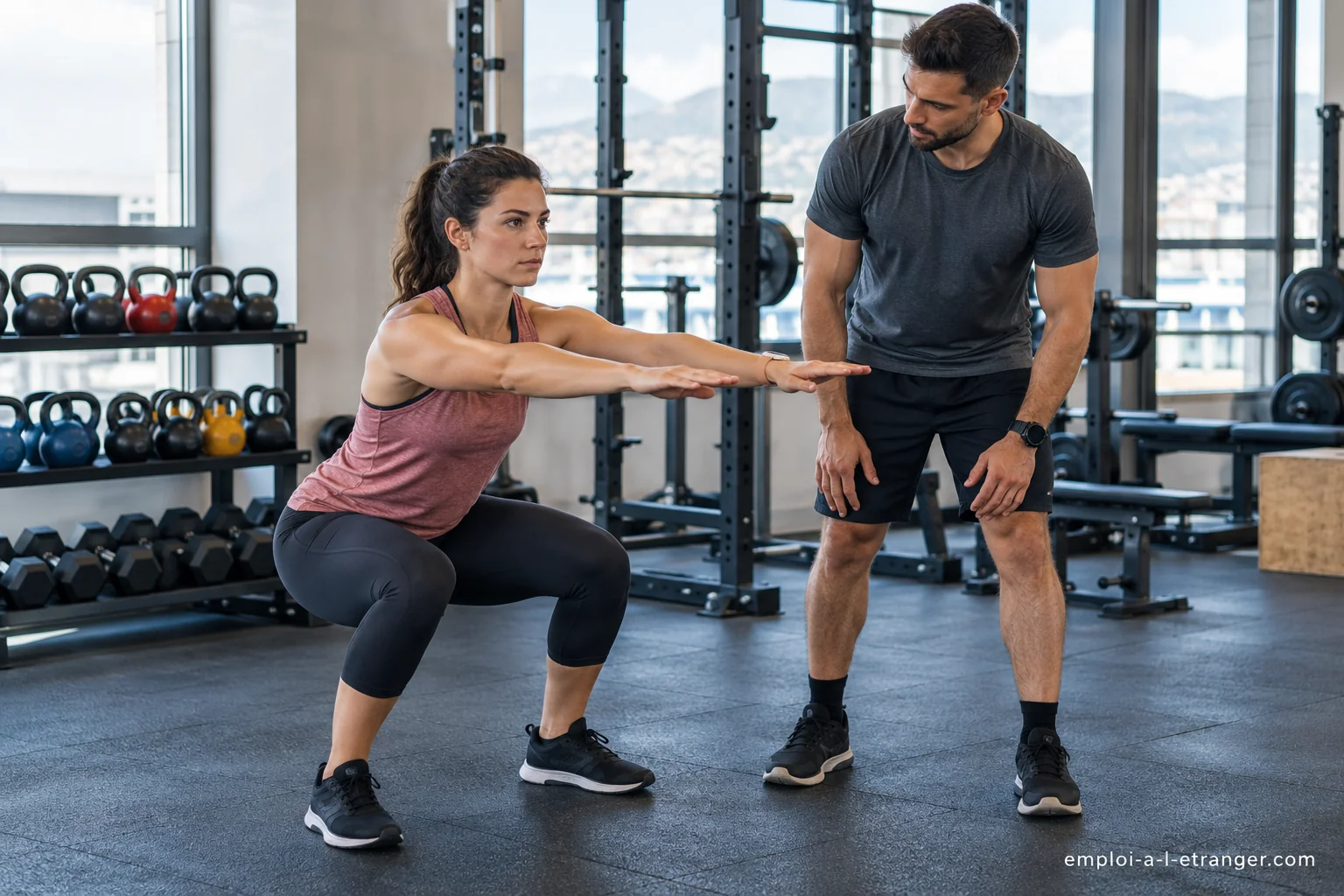
Which fitness coach jobs exist outside your home country?
A fitness coach works in very different settings: a chain of gyms, a resort hotel, a holiday village, a group-class studio, a corporate club or one-to-one coaching at the client’s home. Each setting expects a different profile. A budget gym mostly wants someone who can run the gym floor and keep members signed up; a hotel looks for varied activities, often in several languages; a private client expects tailor-made follow-up and great availability.
Before applying, therefore, find out the target clientele, the type of sessions and where they take place. The same job title sometimes covers days with nothing in common: staffing the front desk and selling memberships, or leading twelve classes a week.
- Gym: floor supervision, assessments, group classes
- Hotel or holiday club: entertainment, aqua fitness, hikes, seasonal work
- Specialist studio: yoga, pilates, cross-training, boxing
- Private clients: one-to-one coaching, travel, flexible hours
Diplomas, cards and certificates: what an employer may require
In some countries, paid sports instruction is regulated and requires a specific qualification, sometimes a professional card or registration with a federation. Elsewhere the market is content with private certifications recognised by the big chains, with no legal requirement. A certificate or licence earned at home may therefore be accepted as it stands, need an equivalence, or carry no official value at all.
Ask the employer exactly what it requires, then confirm with the sports authority or the competent ministry of the country. Keep to hand your diplomas, a translation if needed, your first aid certificate and the list of your continuing training.
Building an application about teaching rather than muscle
A foreign recruiter does not know you; they judge your application on what it shows about how you teach. Describe a programme you designed for a specific audience, for example beginners over fifty or a group returning after a long break, with the planned progressions and adjustments if things get difficult.
Avoid promises of physical transformation: no serious coach guarantees a result. Talk instead about method, observing movement, safety and communication. A short video of a session, if the participants consent, is often worth more than a page of adjectives.
Coaching and health: where your role stops
The line between sports coaching and medical care varies from country to country. Recommending an exercise is coaching; making a diagnosis, prescribing rehabilitation or treating a medical condition belongs to a health profession. A coach who crosses that line risks prosecution and puts clients in danger.
In your application, show that you know how to refer a client to a doctor or physiotherapist when pain, injury or a medical doubt appears. Ask the employer too whether a health questionnaire is used at sign-up and who keeps that information.
- Refer rather than diagnose
- Ask for medical advice when in doubt
- Respect the confidentiality of health data
- Know local first aid procedures
Employee, freelancer or space renter: three different economics
Many coaching offers are not salaried jobs. In many gyms the coach is self-employed and either rents a time slot or hands over a share of session income. This model can suit someone who already has clients; it is risky for someone arriving with no network, because income depends on the number of clients won.
Ask in writing who brings the clients, who supplies the equipment, who takes out liability insurance, how sessions are billed and what happens in case of cancellation. Depending on the country, self-employed status also requires administrative registration and contributions that your net earnings calculation must include.
Work authorisation and insurance to sort out before the first class
A coaching contract is only worth something if you have the right to work in the country. Depending on your nationality and the country, this may mean an employer-linked permit, a work visa, a working holiday programme or no formality at all within the European area. Rules change: check them with the embassy, the consulate or the immigration authority of the target country.
Find out also about health cover, insurance in case of an accident during a session and protection of your students’ data. An employer who dodges these subjects sends a bad signal.
Languages, hours and seasonality: what daily life in the job is like
A coach works when others are free: early morning, late afternoon, weekends. In tourist venues the weeks are long in peak season and almost empty the rest of the year. Ask about typical schedules, split shifts and days off, and about housing when it is offered.
The language of the sessions matters as much as your technique. Announcing an exercise aloud, correcting a movement and reassuring a beginner all call for precise vocabulary. If your level is limited, say so frankly and ask whether paired lessons or language support are planned.
Three warning signs before accepting an offer
Be wary of offers that ask you to pay for a course, a badge or a file before hiring, of those that refuse to name the venue, and of those that promise income without describing the contract. A reliable employer states its identity, address, the post, the duration and the pay.
Before sending your identity documents, check that the business exists, read reviews from coaches who have worked there and ask for a video interview. Take time to compare two or three proposals rather than going with the first.
Frequently asked questions
Is my French coaching certificate recognised abroad?
It depends on the country and the activity. Some markets accept foreign qualifications, others require an equivalence or a local certification, and others do not regulate the profession at all. Ask the employer what it requires, then confirm with the sports authority or ministry concerned before committing.
Can I become a fitness coach abroad without experience?
It is possible in resort hotels or in some gyms that train their own teams, but competition is strong. Highlight your seriousness, your certifications, your internships and a clear teaching style. Be ready to start with entertainment or reception work to gain a first local reference.
Do I have to speak the local language to train clients?
For group sessions a sufficient level is generally essential to give safety instructions and correct movements. Some international venues run in English or French. State your level in your application and ask which language the classes are taught in.
How can I tell whether an offer includes a real employment contract?
Ask for the type of contract, its length, the pay, the name of the entity hiring you and the insurance arrangements. If you are told about renting slots or sharing revenue, you will be self-employed. Have the document reviewed before signing and check the country’s administrative obligations.