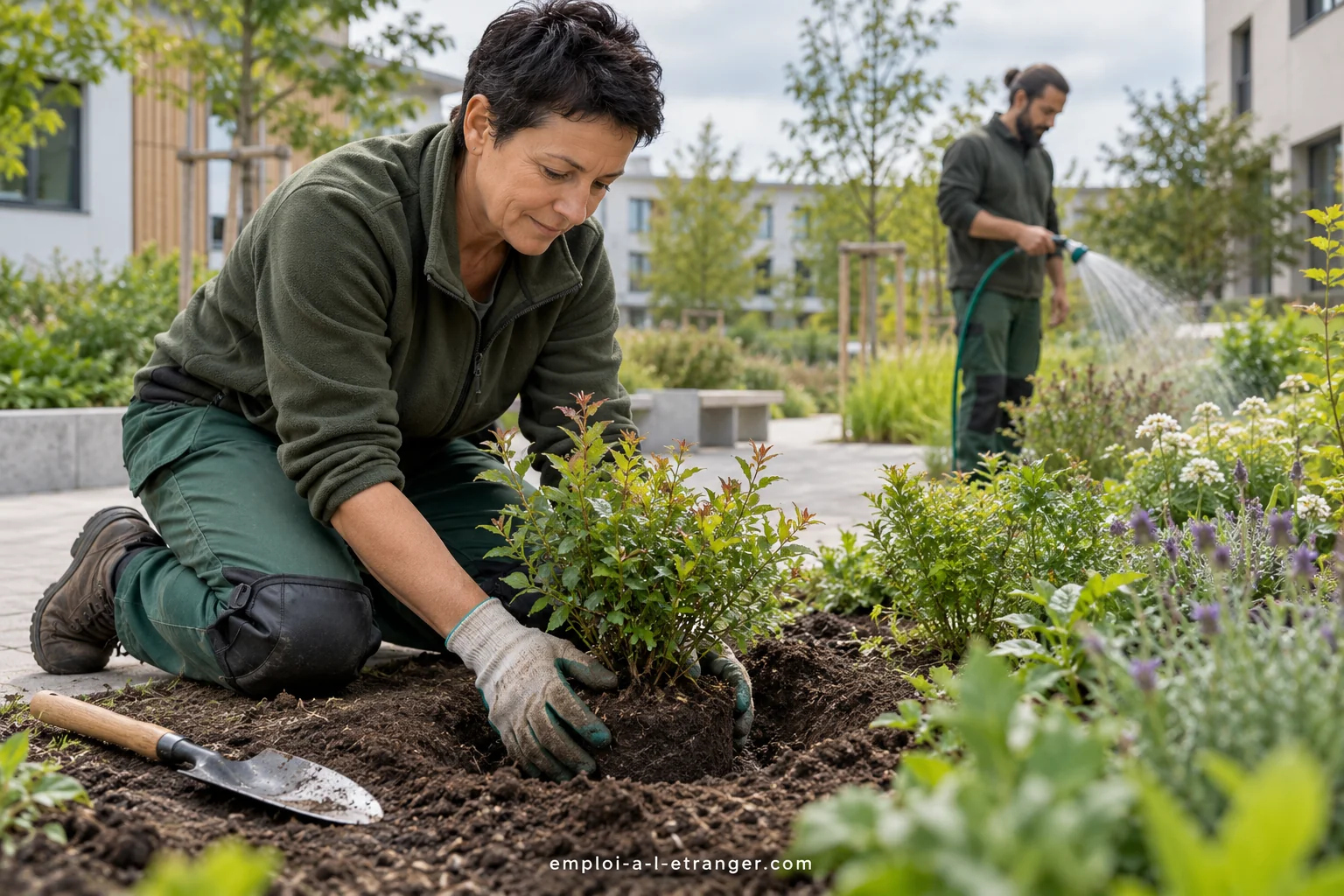
Building a portfolio of projects that speaks to foreign firms
A landscaping recruiter wants to see what you have done with your own hands. Pull together a few projects with before, during and after photos, then state your share in each: soil preparation, planting, pruning, paving, irrigation installation, ongoing maintenance. A good picture does not say who did the work, for how long or with what resources.
Add a short caption for each project: type of garden, approximate area, length of your involvement, equipment used and any particular difficulty such as a slope, heavy soil or limited access. These details show that you know how to organise outdoor work. If a photo is not yours or shows a private client’s property, ask permission before sharing it.
- Before, during and after photos
- Your exact share of the team’s work
- Equipment and techniques used
- Constraints met and how you solved them
Planting, maintenance or construction: choosing a speciality
The word landscaper covers distinct trades. Design-and-build firms create new gardens, with earthworks, paving, planting and irrigation. Maintenance services look after existing spaces: mowing, pruning, weeding, treatments and removal of green waste. Jobs in public parks, golf courses or private estates bring still other demands.
Say what you can do and what you prefer. A candidate who claims to be versatile without giving details worries an employer more than it reassures them. Name two or three areas where you are confident, such as shrub pruning, light landscape masonry or lawn management, and explain how you learned the rest.
Climate, plants and techniques: what changes from one country to another
A Mediterranean garden, a Nordic park and a space in a tropical climate are not worked in the same way. Planting seasons, water needs, diseases and native species all differ. A professional who is skilled at home may have to relearn much of their craft in another setting, which is no sign of poor quality.
Show curiosity by finding out about the plants, soils and practices of the target country before the interview. Mention a plant you have had to learn to manage, an irrigation method or a type of pruning that was new to you. Employers are looking for someone who can adapt their techniques, not someone who repeats exactly what they did at home.
Equipment, training and site safety
Brush cutters, chainsaws, ride-on mowers, mini-excavators and power tools call for training and safety rules that vary by country. Ask the employer which machines you would use, whether they supply protective equipment and whether training is planned when you start.
If you are skilled with a particular machine or process, mention it precisely, for instance the type of equipment and the context in which you used it. Do not describe yourself as an expert on a machine you have barely used: site accidents are common in this trade, and an informed employer prefers a candidate who admits what they do not yet know.
Licences and certificates: driving, spraying and working at height
Depending on the country, some tasks require a specific licence: driving a vehicle with a trailer, using plant protection products, working at height or operating machinery. Check with the competent authority in the target country whether your home qualification is recognised or whether local training is compulsory. Do not assume an equivalence exists.
Ask the employer what they actually require and what they will pay for. Some companies fund compulsory training; others expect you to arrive holding the necessary certificates. That information affects your starting budget. Keep copies of all your certificates, with a translation if the recruiter asks for one.
Seasons, quiet periods and the type of contract
Landscaping is seasonal work in many regions. Spring and summer concentrate planting and mowing, while winter may come down to tree surgery, snow clearance or workshop tasks. Ask how the company keeps its crews busy during the quiet months and whether the contract covers the full year or only the high season.
The answer changes everything for your budget: a seven-month job does not fund a lasting move. Check what you are paid in weeks of low activity, how rainy or frozen days are handled and what happens to any accommodation at the end of the season. These points can be negotiated before you sign.
Travel between sites and how the working day is organised
A landscape gardener spends a large part of the day on the road between sites. Ask whether the company provides a vehicle, whether travel counts as working time, who drives and how the equipment is loaded. In some countries the sites are far apart and the day begins very early.
Ask about hours, Saturday work, how bad weather is handled and whether there is a team leader. A clear organisation reduces stress and accidents. If you expect to work alone, check that the autonomy described suits your experience and that the safety instructions are adequate.
Where jobs are advertised and what to verify before leaving
Vacancies in the sector circulate on horticulture job sites such as Horticruitment, through professional associations and on company pages. Bodies like the Royal Horticultural Society in the United Kingdom or the BALI association for landscape companies can help you understand the trade, the qualifications sought and local custom.
Before you leave, verify the employer’s identity, the exact location, the contract and your right to work in the country for your nationality, with the competent authority. Be wary of farm or gardening jobs paid in cash without a contract: they offer you no protection in the event of a dispute, an accident or unpaid wages.
Frequently asked questions
Is a landscaping qualification essential abroad?
Not always. Many employers judge mainly on experience, skill and reliability. Some tasks, however, such as spraying treatments or operating machinery, require specific certificates. Ask the country’s authority and question the employer about what they truly require.
How should I present my experience if I worked in a team?
Describe your role clearly: preparation, planting, pruning, laying, maintenance. State how long you were involved and which equipment you used. Do not credit your own work with the whole team’s results; a referee should be able to confirm your contribution if checked.
Is gardening work seasonal abroad?
Often, depending on the climate and the type of company. Some firms keep their crews busy all year with maintenance, tree work or workshop jobs. Ask about the contract length, pay outside the high season and any accommodation arrangements.
Can I use my home-country certificates to handle products or machinery?
It depends on the country and the task. Automatic recognition is never guaranteed. Check with the competent authority whether your certificate is accepted or local training is required, and ask the employer whether they cover the cost.