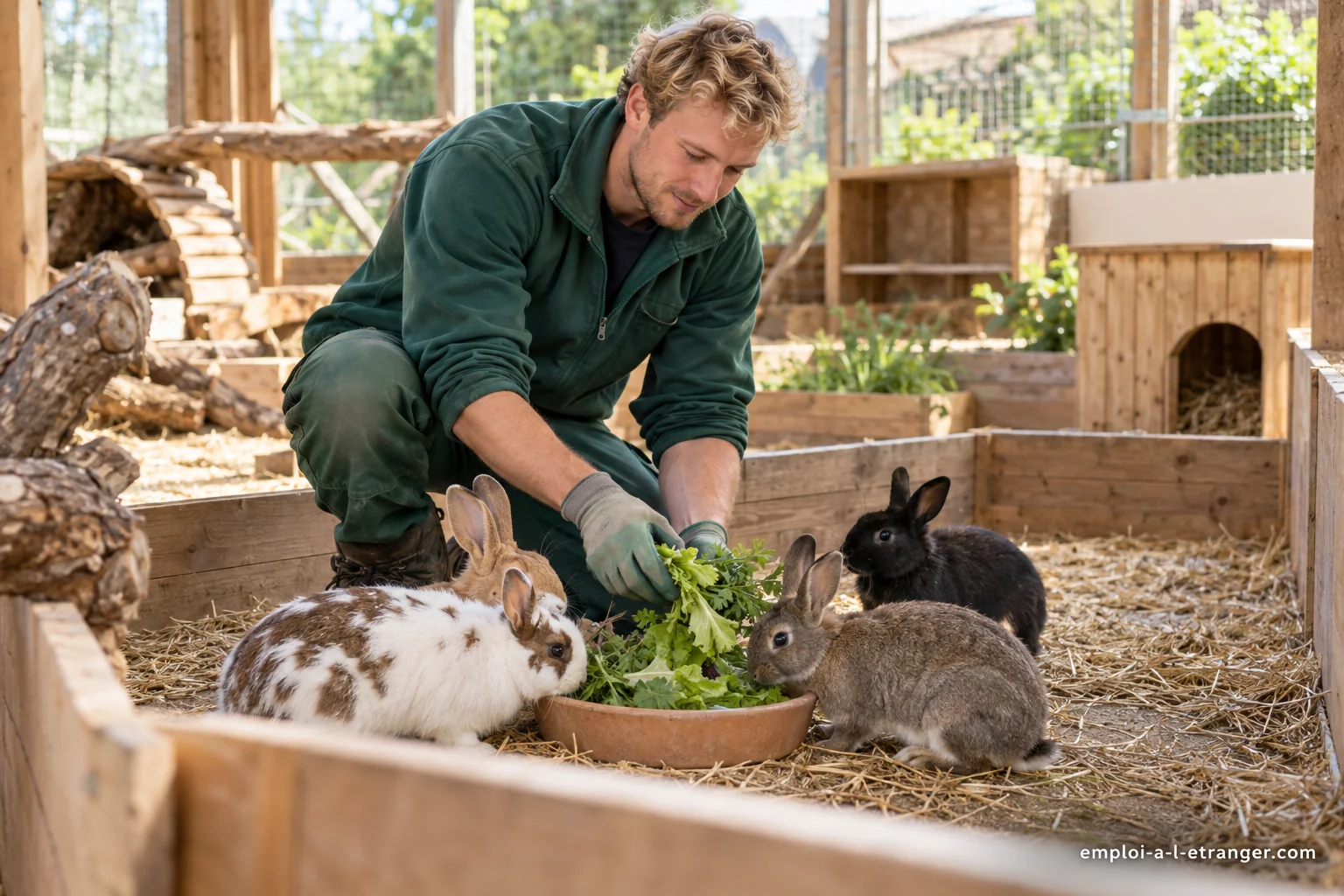
What an animal keeper does every day
The keeper prepares diets, cleans enclosures, observes behaviour and reports any change to the veterinary team. Depending on the facility, the job is in a zoo, a shelter, a wildlife rescue centre, a specialist breeding unit or an educational farm.
The job also means teamwork: handing instructions from the morning team to the evening team, keeping a monitoring logbook, talking with visitors or volunteers when the site is open to the public. The quality of these handovers determines the animals’ health as much as care technique does.
The pace is physical and steady: animals know no weekends or public holidays. Days start early and include repetitive tasks that nonetheless demand constant attention. A foreign recruiter looks first for reliable people who can notice the small detail that changes.
Detailing species and level of independence
List the species or families of species you were responsible for, the length of each experience and the nature of your work. Distinguish what you did under supervision from what you took on alone: preparing diets, gentle restraint, simple medication, transfers, welcoming the public.
Also describe your contact with the veterinary team: observations passed on, assisted treatments, follow-up after an intervention. A recruiter appreciates an account of how you spotted an abnormality and alerted the right person. They see it as a more useful skill than a long list of animals you have come near.
Keep short notes on each placement while memories are fresh: dates, species, tasks, supervisor. Such notes make your application precise and let you answer reference checks consistently.
- Species and length of experience
- Tasks done under supervision and tasks done alone
- Part in veterinary follow-up
- Courses taken and certificates
Environmental enrichment and animal welfare
Serious facilities give enrichment a central place: hiding places, food puzzles, varied routes, sensory stimulation. If you designed or installed such devices, describe them with the behaviour observed before and after. It is an excellent example for an interview.
Find out about the standards of the place you are aiming at. Some parks take part in conservation programmes and professional networks such as EAZA, which lists vacancies on its dedicated page. Other, more modest, facilities work with limited means. This difference affects methods, equipment and the training offered.
Safety, protocols and in-house training
Working with animals carries risks: bites, scratches, diseases that can be passed on, accidents during handling. Ask the employer which protocols govern entering enclosures, working in pairs, protective equipment and recommended or required vaccinations.
Ask about in-house training too. A facility that provides an induction course, a mentor and a gradual progression towards more sensitive species protects animals and staff alike. By contrast, starting a job with no clear instructions exposes you to errors for which responsibility may fall on you.
A good question to ask is how incidents are recorded and reviewed. A facility that learns from near misses is usually a safer and more professional place to work.
Hours, weekends and working conditions to check
Ask how on-call duty, weekends, public holidays and cover for absences are organised. In some places the busy season increases the workload; in others the low season makes outdoor conditions harder. Get the typical schedule and the rule for compensating overtime.
Ask also about the equipment supplied: clothing, boots, gloves, changing rooms, showers. These details matter when you work outdoors and in contact with animals. Finally, ask who your day-to-day contact is and how a disagreement about a care decision is settled.
Qualifications, equivalences and the right to work in the country
Training differs from country to country: some require a specialist diploma, others value practical experience or supervised volunteering. Compare the job’s requirements with your background, and ask whether an equivalence or extra training is required.
The right to work is a matter for the authorities of the host country. An internship or volunteering does not always have the same legal framework as paid employment. Have the offered status clarified, together with insurance cover and entry conditions. Do not set off on the strength of a verbal promise about housing or a visa: ask for it in writing, with its date of validity and any renewal conditions, then check it with the competent administration.
Finding your way among employers: zoos, shelters and rescue centres
Large parks, such as those run by the Zoological Society of London or Chester Zoo, publish their vacancies and detail the profiles they want. They attract many applications and often require previous experience with the species concerned. Smaller facilities recruit through networks or unsolicited applications.
Check how reputable a facility is before committing: official recognition, care practices, openness about where the animals come from, quality of communication. A place that refuses to answer simple questions about animal welfare does not deserve your investment.
Preparing for a practical interview
Many employers add an observation day or a trial to the interview. Be ready to show how you move around animals, clean a space, ask questions and follow an instruction. Your attitude sometimes counts for more than your job description.
Prepare honest answers about your limits too: species you would rather not approach, allergies, physical constraints. A recruiter prefers a frank reply to a commitment that will prove unworkable. And remember that enthusiasm for animals is not enough: you must accept repetition, dirt and discipline.
Frequently asked questions
Do you need a specific qualification to become an animal keeper abroad?
It varies by country and facility. Some require a degree in animal science or animal care, others accept solid practical experience. Read the advertisement, ask whether an equivalence is necessary and prepare evidence of what you have learned: certificates, assessments, task descriptions.
Can volunteering at a shelter lead to a job?
It can be a useful first experience, provided it is supervised and involves real tasks. It does not replace an employment contract and its legal status varies by country. Ask about the conditions of the placement, insurance and whether future employers recognise the experience.
How do I describe my experience without exaggerating my role?
Describe exactly what you did, how often and under what supervision. Distinguish observing, occasional help and full responsibility. Facilities readily check references, and an honest description inspires more trust than a list of species you only briefly came close to.
What health risks should you expect in this job?
The work exposes you to injuries, to diseases transmitted by some animals and to physical fatigue. Ask about safety protocols, equipment supplied, recommended vaccinations and work-accident cover. Have a doctor assess your personal situation before you leave.